This article is the third update of the Harvest Mouse species account which I initially wrote for the book, “Mammals, Amphibians and Reptiles of the North East” which was published by the Natural History Society of Northumbria in 2012 and is free to download from the home page of this website. It has only been two years since the last update but there have been some significant new records in the interim that have come to light through the Mammal Society’s National Harvest Mouse Survey. This account summarises all the information that I am aware of up to early 2024; if anyone is aware of any errors or ommissions, I would be grateful if you could let me know via the contact page.
The Harvest Mouse Micromys minutus, is Britain’s smallest rodent and the only British mammal with a prehensile tail. It differs from other British mice in having a blunt nose and small ears, more reminiscent of a vole, and in adults the dorsal fur is a distinctly ginger colour, contrasting with the white belly. Its small size and prehensile tail allows it to uniquely inhabit the “stalk zone” (the shoots and leaves of monocotyledonous plants) and its most readily noticed field sign is its nests, woven into the living leaves of the plants. Traditionally it has been associated with arable crops but it is probably originally a species of wetlands and associated habitats and certainly in the North East almost all recent records have been from tussocky grassland or wetlands. In winter it becomes more terrestrial and will utilise the burrows of other small mammals or move into stacks in barns and very occasionally in to other outbuildings (Harris, 1979).
In Britain it has a mainly southern and eastern distribution (Trout and Harris, 2008) where it appears not to be uncommon in the right habitat. For example a search of likely habitats in Essex by a single surveyor confirmed their presence in 19 new tetrads in less than four hours! (Dobson, 2001). Further north its recorded distribution is patchy with Howes (1985) only having six Yorkshire records north of Northallerton and the recent national mammal atlas (Crawley et al, 2001) showing essentially all of the North York Moors and most of the Yorkshire Wolds as blank. To some extent this will be a case of under-recording. An analysis of owl pellets from 22 sites across the North York Moors between 2008 and 2014 found Harvest Mouse remains at 10 of those sites (Capes 2015) and subsequently, examination of further owl pellets by the same researcher has found their remains in several of the valleys in the North York Moors. (Derek Capes, pers comm., 2022). Likewise Paul Chester has found their nests at Castleton on the North York Moors and in the A19 road verge at Crathorne at the northern boundary of the County of Yorkshire (Paul Chester, pers comm., 2022).
In North East England the species appears to have been very infrequently encountered historically. Mennell and Perkins in their account of mammals in North East England published in1864) note; “We have but few recorded localities for this species in our district, but among these, one is worthy of note from its great elevation; Mr. Wm. Backhouse has taken it at St. John’s, Weardale, 800 feet above the level of the sea” (at grid ref. NZ069339). Similarly Gill (1905) states: “The harvest mouse appears to have been very rarely noticed in the County of Durham and is doubtless scarce, though I have lately seen it myself a very short distance north of the Tyne.”
This seems to have continued to be the case for much of the intervening period. Harris and Lording in their 1974 survey of Harvest Mice in Britain obtained only four records from the North East plus one just south of the region at Hutton Rudby in North Yorkshire (Harris, 1979). Records continued to be scarce up to 2000 with only six accepted records in the last two decades of the 20th century. These were: Lockhaugh Sewage Farm, in the Derwent Valley near Gateshead, in 1985; Castle Eden Walkway in Stockton in 1986; Boulby in south Cleveland in the 1990s; Prestwick Carr, Northumberland in 1998 and Earsden Hill Farm, near Morpeth in 1996 and again in 1997. These last two sites are at or close to, two of the four places where Harris and Lording had found the species in 1976.
The lack of recent records and consequent concerns that the species might be extinct in the region led to series of re-introduction attempts in the early 21st century which are detailed in Bond (2010). These were initially organised by the author and subsequently by the countryside staff of Stockton-on-tees Borough Council and occurred at four sites in the Tees Valley: Cowpen Bewley Woodland Park; Wynyard Woodland Park; Portrack Marsh and Teesmouth Brine fields, over the period 2001-2005. A later (2004 onwards) introduction was made in reed beds at East Chevington, Northumberland, led by Sam Talbot. This was a separate project to the Stockton introductions but used Harvest Mice originating from the captive Stockton population. Initially attempts at all five sites appeared to have failed as no Harvest Mice were found at any of the sites for the first few months, or in some cases years, following the releases. Subsequently Harvest Mice have been positively identified at all sites except Portrack Marsh, with records now spanning a decade or more at three of the sites. Whether these more recent records are the result of those introductions or from an existing population, or both, is open to question.
Further research by the author in this century brought to light a handful of records from the 1960s based on conversations with the likes of retired farmers and gamekeepers. With the exception of an outlier from High Spen, which was approximately 3km from the Lockhaugh Sewage Farm record, these additional records were all from the Tees Lowlands roughly north and south of Darlington, though this distribution will be biased to some extent by the author being based in that area. There is an unconfirmed record of Harvest Mouse from Ladythorne, north of Haggerston and just south of the Scottish border, from 1997. Unfortunately no further details of the record could be obtained but it is the only known claim of a record in Vice County 68 and would consequently be the most northerly record in England if proved. Other than those associated with a re-introduction programme at East Chevington near Druridge Bay and a separate record from 2000 from 5km further south at Warkworth Lane, there had been no confirmed records of Harvest Mice in Northumberland or indeed anywhere substantially north of the Tees Lowlands in the first decade of the 21st century.
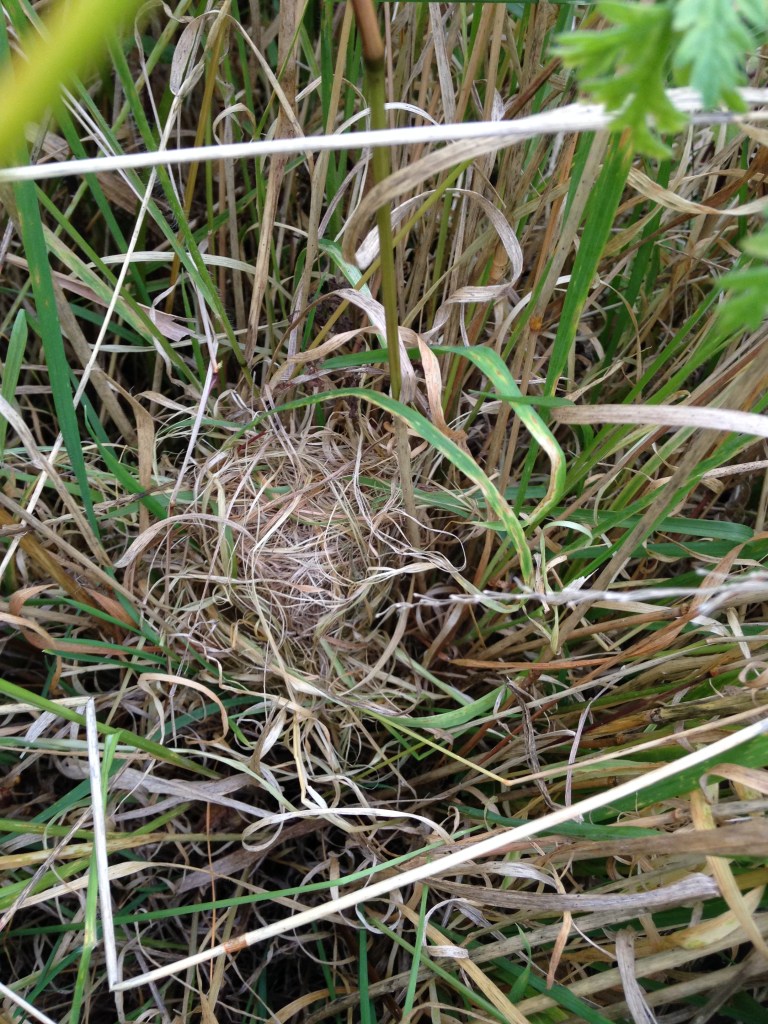
Fears of regional extinction proved to be unfounded as subsequent attention on the species both as a Local Biodiversity Action Plan Species and through publicity associated with the re-introductions brought to light a small but increasing number of records throughout the Tees Valley. The first of these occurred when a few Harvest Mice turned up in a stable at Pinchinthorpe near Guisborough in 2003 (Kevin Bulmer, pers comm. 2003). As the habitats immediately surrounding the barn were not thought suitable for Harvest Mice it was postulated that they had come in with the bedding which had come from Boozebeck about 8 km further east. In the same year two records came to light near Great Ayton. While, technically, outside the political region in North Yorkshire, it is just 4 km from Pinchinthorpe so the mice in the stable may have been from the surrounding area. The following year, the author found two Harvest Mouse nests between Darlington and Stockton and the species was also recovered from Long- eared Owl Asio otus pellets near Eaglescliffe (Alistair McLee, pers comm., 2004). Further records continued to trickle in during the first decade of the century and the species was found to occur sporadically from around the Boulby area in the extreme south east of the region, from where there were records spanning two decades, as far west as the north of the borough of Darlington. Notably there were records in several separate sites between the north of Darlington and Stockton which suggest that the species was widespread though possibly localised in that particular area.
Bond (2010) describes all of the known North East records, including historical and unconfirmed ones, up to 2009. At that point 16, accepted records had come to light from this century, all in the Tees Lowlands, including three from Great Ayton and a further two records also just south of the border with North Yorkshire at Seamer and Hutton Rudby. There was also an unconfirmed record from Brinkburn Priory in Northumberland.
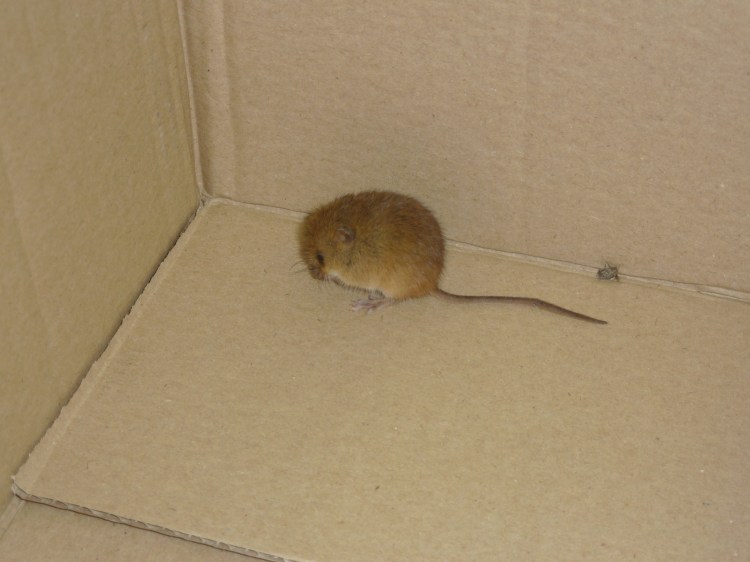
More recently the picture of Harvest Mouse distribution in the North East has changed significantly. Initially this was through several casual records that extended the species’ known, current distribution, for example to the northern boundary of the borough of Hartlepool and at Bowburn, just south of Durham City. There was even an exceptional account of two small, ginger mice climbing around the top of grass stems at Slit Woods in Weardale. This is towards the extreme west of County Durham approximately 35km west of the closest twenty first century record and 16km west of William Backhouse’s nineteenth century record. At an elevation of around 350m it would be around 200 feet higher still than Backhouse’s record, which if accepted would surely make it a strong contender for the UK’s highest Harvest Mouse record.
This evidence that Harvest Mouse was still extant further west and north in the North East than previous records had suggested led to regional surveys for the species being undertaken in 2014 and 2015. These were organised by Northumbria Mammal Group in conjunction with both Durham and Tees Valley Wildlife Trusts. Over the two years, 69 surveys took place at a total of 64 separate sites and resulted in positive evidence of Harvest Mouse in 12 new locations plus confirmation of its continued presence in some of the sites where it had previously been recorded. Perhaps the most notable single record was at Langton, west of Darlington which was the first record for Teesdale since Harris and Lording found them a few miles up the road at Little Newsham, 40 years previously. Several other surveys further up Teesdale all proved negative. The surveys found Harvest Mouse to be distributed in a band extending along the east coast, from Hartlepool as far north as Seaham, and inland across to the several sites just to the south of Durham City, roughly as far west as the A167. All sites surveyed west or north of Durham City proved negative. Outside of the organised surveys other records also came to light, which mainly filled in gaps between the species known distribution. However, a tiny mouse was seen clambering around the top of some campion stems at Clara Vale west of Gateshead. From the description given it seems likely that it would only have been Harvest Mouse, which moves its current distribution much further north and west in vice county 66, although as noted above there are two twentieth century records from that general area of the County.
More recently still, a Tees Valley Wildlife Trust project, started in 2018 and involving the analysis of owl pellets has to date found Harvest Mouse remains in eleven, 1km squares where the species had previously been unrecorded in East Cleveland. While this method doesn’t give the exact location where the mouse was caught, when added to a further three records from that area obtained by the author in 2016 it nevertheless demonstrates that the species’ is widespread across East Cleveland, rather than having a sporadic distribution.
The picture of Harvest Mouse distribution in vice county 66, which is effectively the area between the rivers Tyne and Tees, was again changed very significantly by the Mammal Society’s National Harvest Mouse survey over the winter of 2022/23. Harvest Mice were discovered in total of ten new locations, all but one of them to the west and/or north of Durham City. Six of these locations were in the borough of Gateshead, though perhaps the most unexpected was at Derwent Reservoir, which is in the extreme north west of County Durham. Seven of these nine new records were found by Monique Scott, demonstrating the difference that can be made by a surveyor making a concentrated survey effort. Of the two other records, one was at Malton Nature Reserve, 8km to the west of Durham City, by Terry Coult. This was significant as it turned out that Terry had released some Harvest Mice there 30 years previously, in what is now the first known introduction attempt in the North East. However, as with the other introductions it is unclear whether the current population is the result of the releases or an existing population. Outside of the survey another significant record came to light when a nest was found during reed bed management at Durham Wildlife Trust’s Low Barnes nature reserve. Notwithstanding the possible record from Slit Woods, this would be the second ever record for Weardale and the first for over 150 years.
The most recent National Harvest Mouse survey, winter 2023/24, largely confirmed the known distribution in the vice county, with some minor extensions, with the exception of a Harvest Mouse caught at the Wildfowl and Wetlands Trust in Washington. This was the first record for the north east of the vice county, in the area between the Wear and Tyne, with the exception of an unverified and unattributed record from Washington dated 1950. It later transpired that staff from the Wildfowl and Wetlands Trust had been finding Harvest Mice there for something like the past 10 years.
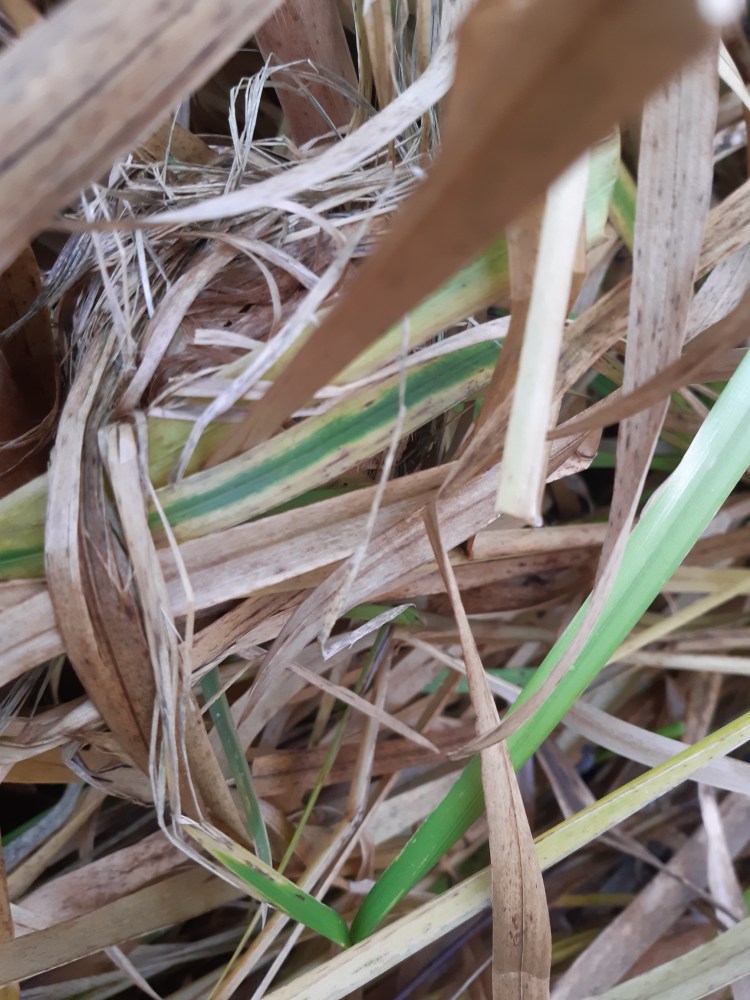
It is now known that the Harvest Mouse can be found throughout East Cleveland, ie the north east part of vice county 62 and that it is widely distributed across most of vice county 66, with the exception of the south west. However, the picture in Northumberland, ie vice counties 67 and 68, currently looks very different and there are very few additional records to add to Gill’s observation of one from an unspecified location a very short distance north of the Tyne. In 2022 the author was told of a nest found off the ground in grass in a tree tube, which sounds very suggestive of Harvest Mouse. The nest was near Morpeth, i.e. some 5-10km from the records in the East Chevington and Causey Arch areas, so it may be that the species is widespread in that part of south east Northumberland. Apart from a few records in the wider area around East Chevington, the only verified record from Northumberland in the first two decades of the twentieth century would appear to be when Derek Crawley found nests at Big Waters, near Newcastle Airport in 2015. More recently, 2022, there is an accepted record from the National Mammal Atlas Project from Greenhaugh, close to Kielder Reservoir and also one from 2021 via the Mammal Society’s Mammal Mapper App., from nearby Falstone, which was considered correct. These are about as far from the other Northumberland records as suitable habitat exists, so it may be that the situation in Northumberland is simply what it was further south in the region two decades ago, ie a fairly widespread species that has largely gone under the radar.
 Raven on the Wing