It was St Paul who warned us that we might meet Angels unawares. I certainly wasn’t expecting my encounter, which happened a long time ago when I was a countryside warden. Being a countryside warden wasn’t always as idyllic a job as you might think. I reckoned that I spent a good quarter of my time just picking up litter. Litter picking was seldom much fun, occasionally downright unpleasant and you didn’t need to be Sherlock Holmes to work out what the visitors had been doing in the car park the night before. Usually, the detritus from people’s activities was monotonously predictable but just occasionally something completely surprised you. One morning, when hovering up the fast food wrappers from the children’s play area, there before me between the trees, near to the swings, stood the Destroying Angel.
I’d never seen one before but I knew straight away what it was. It might not have come to take me to my maker but if I didn’t do something about it, it could have helped somebody else on their way. Not for the first time my aluminium litter picker was my first line of defence and before you can say “biodegradable” it swung in to action and this agent of death was in the black bin bag.
Of course this Destroying Angel wasn’t a character from the book of Revelation; I don’t think you can overcome that sort by smiting them with litter pickers, unless you were a pupil at Hogwarts. Instead it was a fungus, possibly the second most deadly type of fungus on the planet!
Fungi are something that I have never really got to grips with (litter picker notwithstanding). When I was at school I remember them being lumped in with the plants, but plants they most definitely are not. The only similarities are that they are underpinned by root like structures, grow up out of the ground and then stand still. These days they have a kingdom all of their own, separate from the animals and plants and while there is still a great deal to learn about them one thing that is certain is that they are essential to our existence. They form a key part of the cycle of decomposition, without which the circle of life couldn’t continue and we would be up to our necks in dead things.
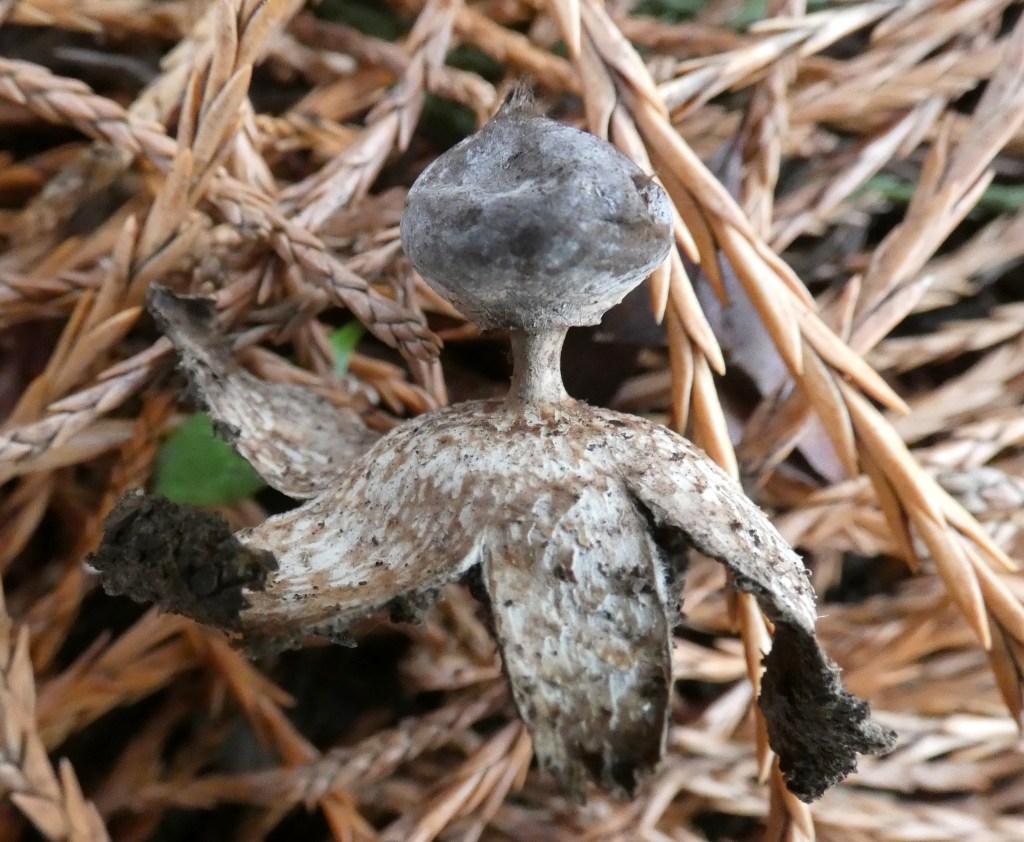
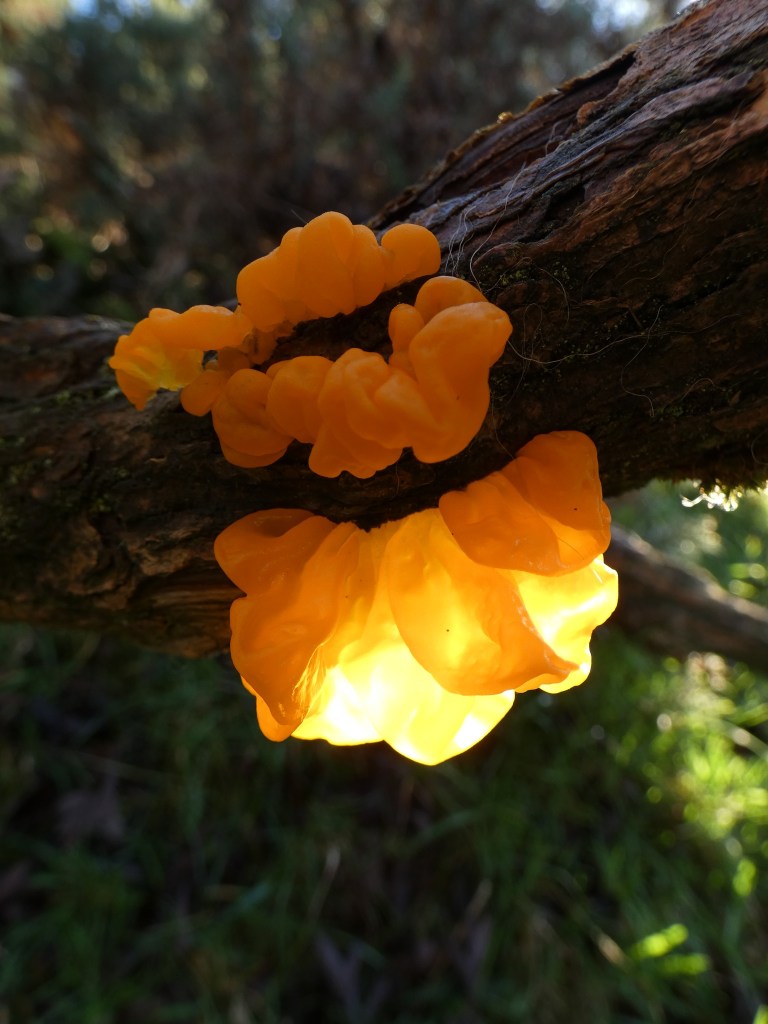
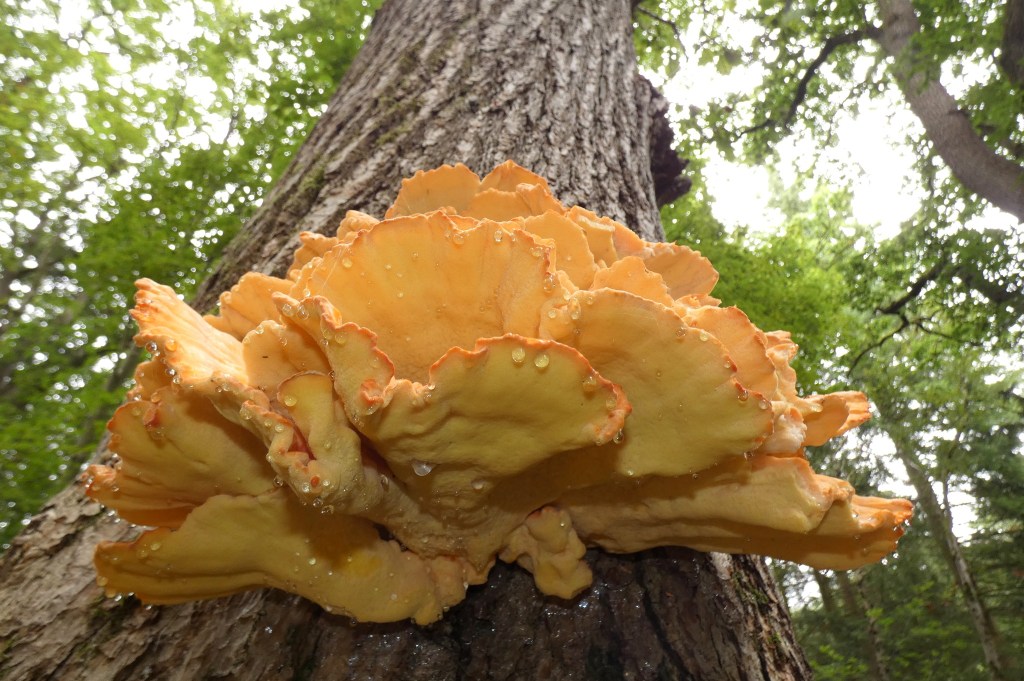
Fungi are all around us but generally keep a low profile. Their thread like “hyphae” spread largely un-noticed through soil and plants and it’s only when their fruiting bodies pop up, usually in a damp autumn, that we tend to notice them. The typical fungi might take the form that we know as the toadstool, but it’s by no means the only one. There are balls and brackets, smuts and rusts. Even fungi that resemble parts of the body; fingers, ears and brains, and you’d be surprised what part of a dog, a Dog Stinkhorn fungus resembles.
Even if we aren’t sure what a toadstool is, we all know one when we see one, but knowing which one it is a completely different matter. The Destroying Angel, when mature, is a dazzling white colour with a distinct ring around its stem but when first pushing through the ground it can look a bit like a field mushroom. Its close and even more poisonous relative, the aptly named Death Cap, is a boring yellowish-olive, i.e. more or less the same colour as most other toadstools. This group of particularly poisonous toadstools are known scientifically as Amanitas and the poison itself as amotoxins. These are poisons that could have been designed by an evil genius. After the initial symptoms of sickness and diarrhoea the victim appears to recover, only for the symptoms return, this time destroying the liver and causing death.
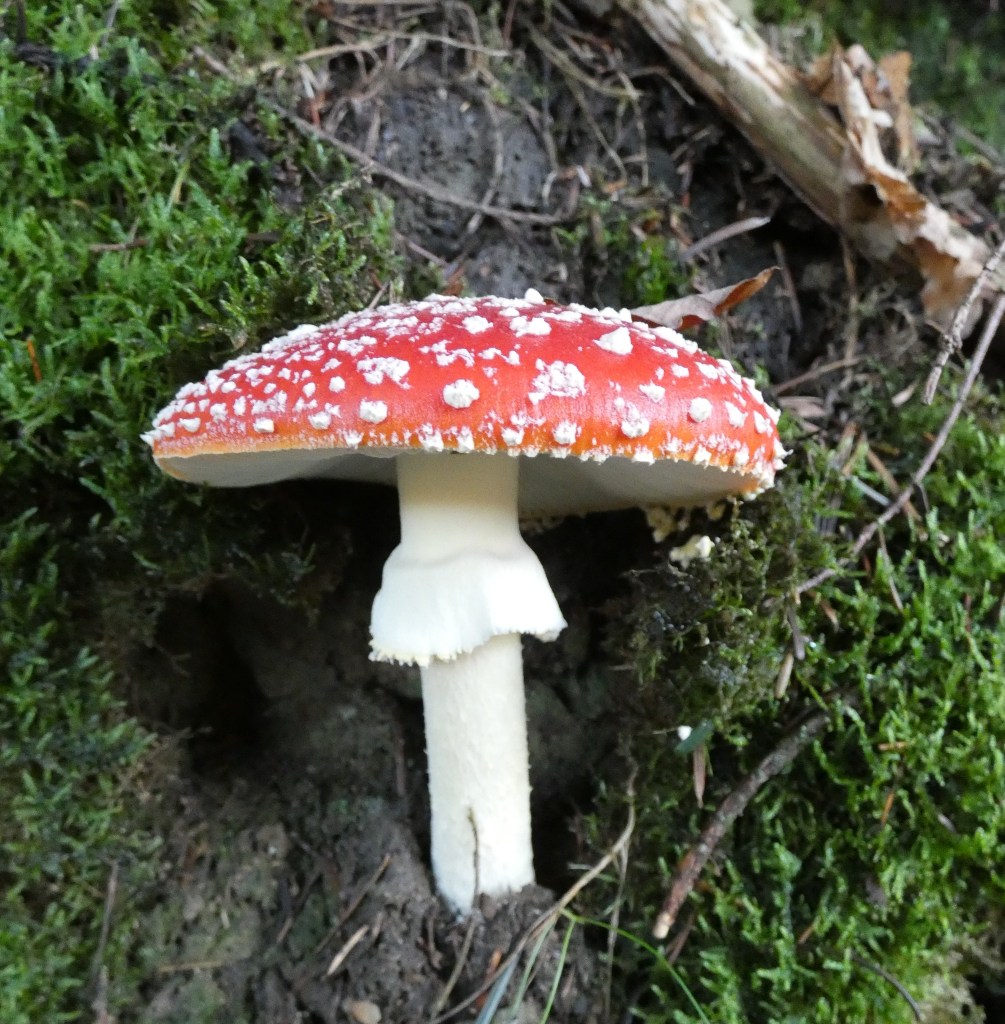
Fortunately a third member of this toxic family gives its game away. This is the garish Fly Agaric, a shiny scarlet dome with white spots, the toadstool of choice for every garden gnome. It is so story-bookish that it is something of a surprise when you see your first one and realise that it does actually exist in the real world (though sadly in my experience the gnomes themselves are either invisible or, say it in a hushed whisper, they don’t really exist). Fortunately there are relatively few cases of death with this toadstool, partly because it isn’t quite as unremittingly deadly as its two cousins but mainly I suspect because it just screams “poisonous!” However if you can avoid the poison, it is also hallucinogenic. The Sami people of Lapland allegedly achieved the resulting high without the poisonous low, by an ingenious means of filtration, which involves feeding the toadstools to their reindeer then drinking the deer’s urine (and once again I find myself wondering, “Who first thought that might be a good idea?”)
Of course most toadstools aren’t deadly and some make much tastier eating than the standard “supermarket” mushroom. One such is the Shaggy Ink cap or Lawyer’s Wig, which can often be seen on areas of short grass at this time of year. This is the one with the narrow, steeply sloping caps; the sort of toadstool that you can imagine a family of tiny elves might carve a door and some windows in. It makes good eating when young, before it starts to seep the black, inky fluid. However even with Ink caps it’s never that straightforward. Its relative, the Common Ink cap is fine to eat on its own but if consumed with alcohol, even if drank several days later, it causes sickness and palpitations, earning it the nickname of the “Methodist Mushroom”. So with toadstools, the golden rule is to never eat one unless you are absolutely sure you know what type it is, or my personal variation; “never eat one!” After all, you don’t want to meet the angels before your time.
 Raven on the Wing