I had always regarded a trip to Middlesbrough as being a bit like a visit to the dentist, you dread the thought of it but it usually turns out not quite as bad as you expected. More recently though, thanks mainly to my wife’s ardent defence, I’ve seen a different side to “The Boro’”. Added to the already admitted icons that are the Transporter Bridge and the Town Hall, I could now cite the splendidly refurbished Stewart’s Park, the dramatic dockland and, raising my eyes above the pedestrian dodgem circuit, some outstanding architecture in unexpected quarters. But what surprised me more than anything was a hidden gem on its eastern border. Known as Fairy Dell, it is a little remnant of old woodland, one of the few that have survived the plough, successive wars and now suburbia.
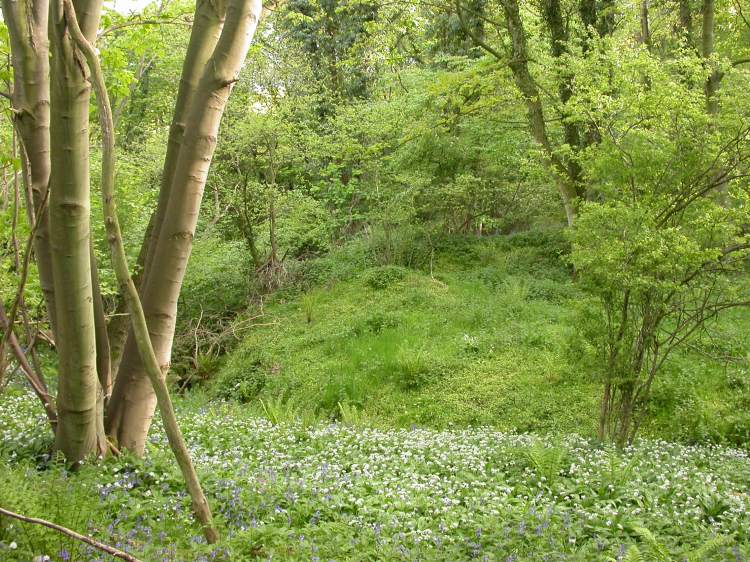
I came across Fairy Dell by accident. Taking part in one of the popular, Tees Forest Trail Races that spun us round the Leisure Farm, past a new housing estate and bundled us down a hill; what breath I had left was taken away by finding myself jogging past fronds of ferns, and patches of Bluebells and Dog’s Mercury. Not that Fairy Dell is a secret to everyone. It turns out that it is one of Middlesbrough’s Local Nature Reserves and has an active “Friends” group that lovingly tends and tweaks it to get the best from what is a fairly small relict of what once was.
Venerable woodlands like Fairy Dell aren’t just any old trees though. In fact, oddly, they aren’t necessarily even about the trees. To paraphrase the old saying, the trees might even end up obscuring your view of a wood’s true importance. Technically Fairy Dell is old but not ancient. To be a truly ancient wood means having been a wood for at least 400 years. This isn’t as arbitrary a date as it might sound as the idea of planting new woodlands didn’t really occur to anyone before Elizabethan times, so any wood that existed then had probably existed a lot longer still. That isn’t to say that they are pristine; there is scarcely a place on earth that hasn’t been modified by man and the trees in ancient woodland may have been felled and re-grown several times. Nevertheless some of that woodland habitat may effectively link back to the woodland that cloaked the whole of Britain, not too long after the last ice sheets retreated. In that time they have slowly accumulated an ark of species that spread ever so slowly and struggle to survive anywhere else and it’s these that make old woods so irreplaceable.
Most of the forms of wildlife associated with ancient woodland aren’t exactly “A list”. Rather they tend to be insects that bore into dead wood, the rarest of rare bats and specialist slugs. But, of all these, the gold star for obscure and overlooked surely goes to the Scarborough Snail; so called because its presence in the world, unknown until the 1820s, was first discovered in a wood near Scarborough. No bigger than a pin head, its shell will glisten like amber if held in the sunlight, although, should you ever find one, holding it in the sunlight is the last thing you should do with it. Its affinity for the undisturbed under storey of ancient woodland is because it can’t tolerate drying out. Thought to be disappearing from the south of the country, the steep woods of the North Yorkshire coast are something of a stronghold for it.
Fortunately, for those of us who aren’t that intimate with minute molluscs, there is a whole suite of much more obvious plants that are indicators of ancient woodland and spring is definitely the season for the budding ancient woodland spotter. It’s then that the true nature of the woodland is revealed as the wildflowers of the wildwood burst from the earth. In fact there’s a bit of a procession, like coloured floats, each one trying to outdo the others, before June casts its shadow of summer leaves and the carnival is over. It can start as early as January with the Lesser Celandines, waxy yellow buttercups that moved Wordsworth to write three poems about them. February follows on with Snowdrops, a plant that you could identify from the name alone; then Windflowers flutter through March. By April it’s getting competitive as the white, Wild Garlic that announced its presence to our noses at the turn of the year jostles for spaces with the dowdy but persistent Dogs Mercury and the unfurling fronds of ferns, while the subtly beautiful Golden Saxifrage takes refuge in the boggier hollows. Then in early May the procession reaches its climax and the woodland floor is carpeted blue. If there’s one plant that everyone can recognise it’s probably the Bluebell and its enduring presence is thought to be the inspiration for the “something blue” in the bride’s wedding rhyme. Bluebells are something of a British speciality; with around half of all the Bluebells in the world found in this country, May is a good time to stay at home.
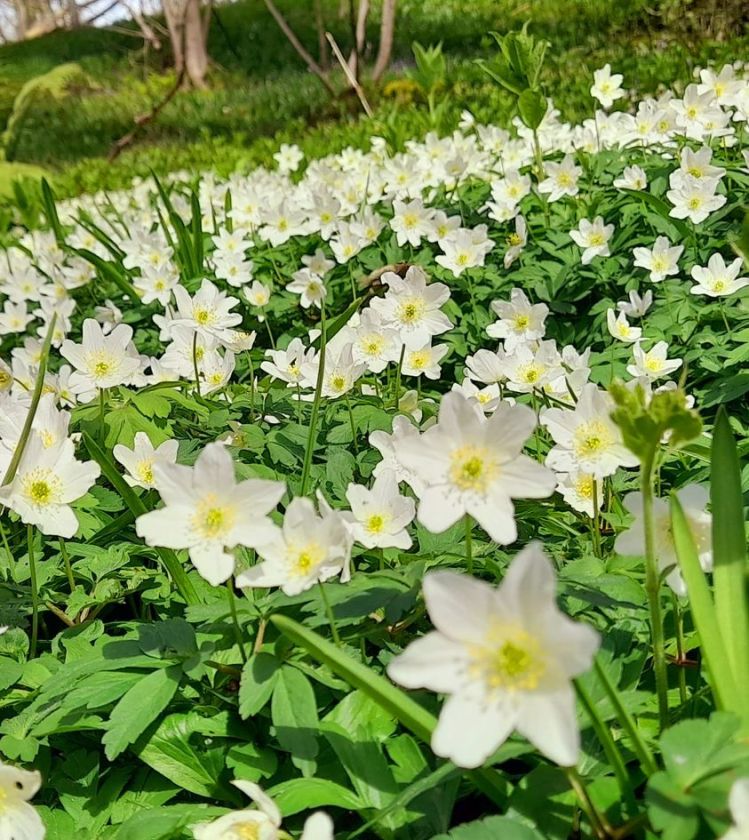
(photo by Sue Antrobus)
Not all ancient woods have all of these ancient woodland plant indicators and a combination of unfathomed ecology and uncharted history means that one wood will specialise in one set of plants while another will host a different mix. So for example, Hawthorn Dene near Seaham is known for its Snowdrops; Thorpe Wood in Stockton has banks of Windflower and Ramsons but no Snowdrops and just the odd Bluebell, while the Great Wood at Durham is just ridiculously blue. But to my mind, this inexplicable diversity only adds to the charm. So if you are going down to the woods today, be sure of a big surprise. Perhaps I could even say the same about Middlesbrough.
 Raven on the Wing