According to a Horizon programme that I watched entitled, “What makes us human”, our distinctiveness was unsurprisingly put down to the complex nature of our brains. Now, while I wouldn’t dream of disagreeing with the good doctor Alice Roberts, there are undoubtedly other things about us that define us as a species and one of these is our propensity to run.
Not that we are particularly fast, as I once found out when I raced a bat. (Raced is probably the wrong word as I don’t think the bat realised that it was in a competition). The way it came about, I was out jogging when I saw a bat flying repeated triangular laps around a football pitch. It would go down the touchline, across behind the goal mouth and cut back to the half way line. I’d read that bats were supposed to fly at 15mph, which in athletics terms is four-minute mile pace, so I reckoned I should be just about able to get the edge on it across the 18 yard box. So, jogging to the goal line, I waited until the bat drew level with me then I sprinted as fast as I could. The bat left me standing, going almost twice as fast as me. In what is probably my only contribution to scientific discovery two things were brought home to me; firstly that there was still a lot to learn about bats and secondly that most other forms of wildlife move faster than we do.
Even so, what we lack in, out and out speed, we make up for in persistence. Over a long distance, especially in hot weather, there are very few animals that we can’t run down. The writer, Laurens van der Post, once described a hunt by a group of Namibian bushmen in which they chased a herd of antelopes for around 13 miles, roughly a half-marathon, at the end of which the bushmen broke into a sprint to make the kill.
For most of us it’s been a while since natural selection honed our talent for chasing antelopes, nevertheless there is something about running that, once tried, can prove addictive and that triggers off that dogged persistence. How else can you explain the extraordinary exploit of Eddie Izzard, a man who could hardly be less like a Namibian bushman in either build or background, yet who managed 43 marathons in 51 days for Sport Relief.
It’s 8.59am, 61minutes and a cup of coffee before I am used to firing on all cylinders. I’m stood trying to massage some life in to my calf muscles while half listening to some instructions from man in a startlingly yellow T-shirt who is stood on a park bench. I should be paying more attention but an involuntary, slightly deeper intake of breath lets me know that my adrenaline gland at least had been taking some notice. Around me are some 300 other people, dressed in almost as many different colours of T-shirt and with scarcely fewer shades of suntan on their legs. (I’m hoping there’s a spot prize for the ones most like milk bottles). What unites us is a desire to run round three laps of Darlington’s South Park, for some to do it as quickly as they can, for others just to do it.
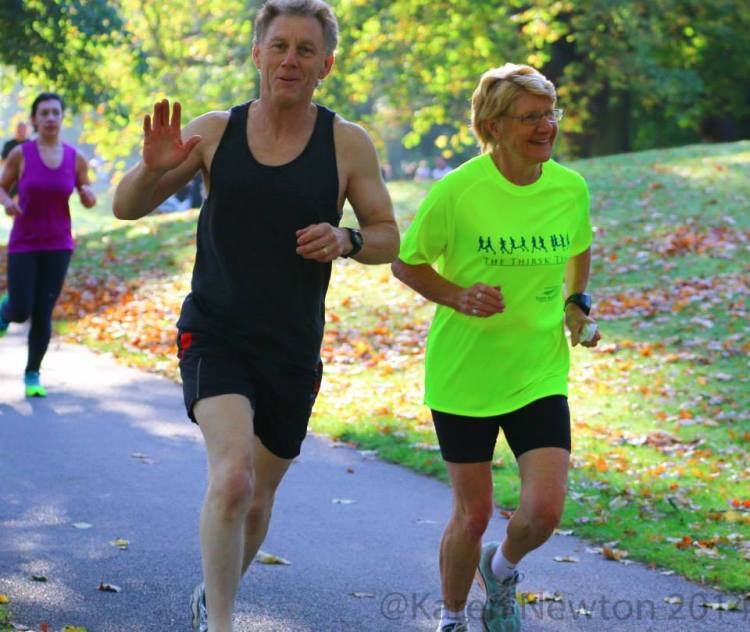
We are not alone, us 300. In over 600 locations across the UK and 2,000 worldwide, at 9am on the dot, every Saturday, hundreds of thousands of others launch their weekend with these increasingly popular parkruns. Parkrun (which is all one word, I suppose to denote that it isn’t just any old run in the park) is a relatively new phenomenon in running, starting in 2004. Like the classic exponential curve, it started very slowly, picked up a bit of speed then shot up the graph like a rocket. The Darlington version started in 2012 and just nine years later almost 12,000 people have done the three laps of South Park.
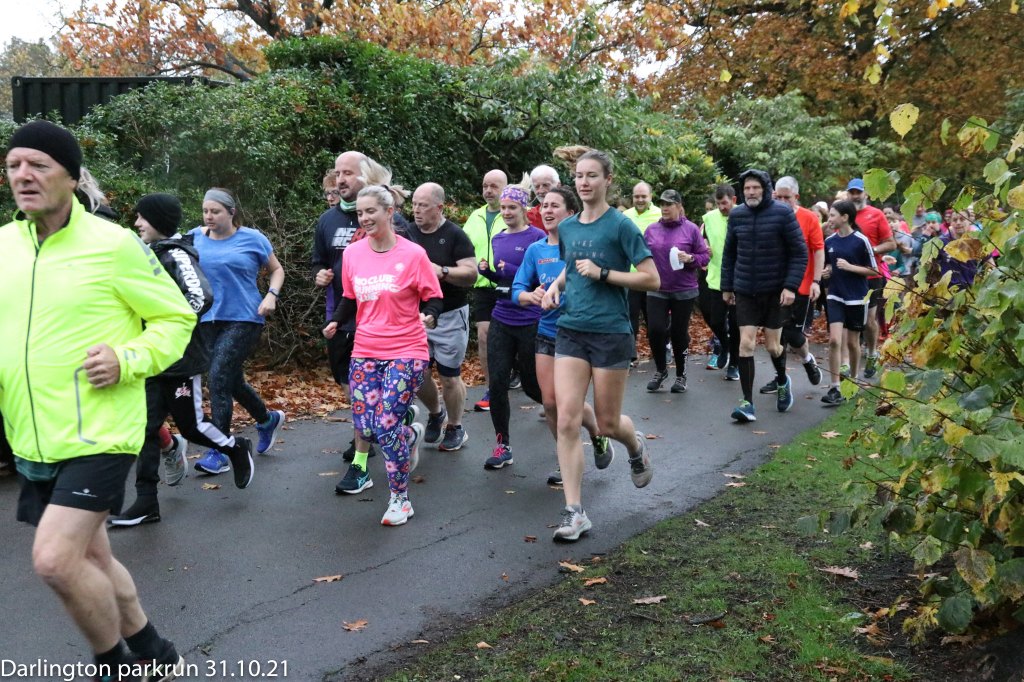
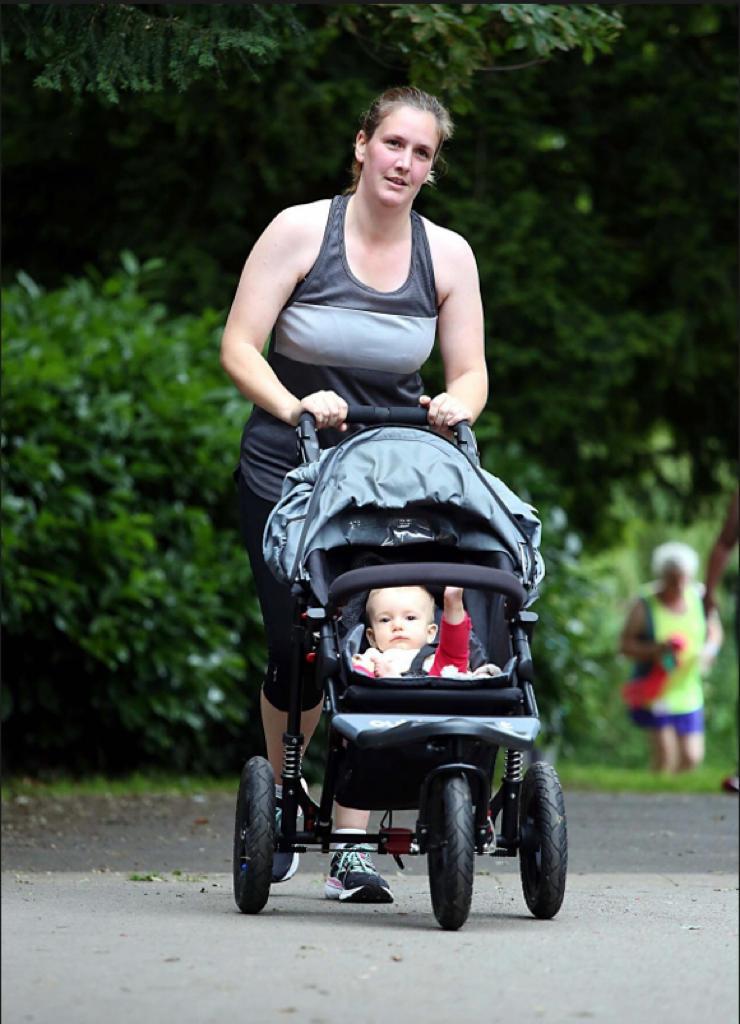
It’s not difficult to see why. This is running at its most open and friendly, where everyone is welcome whether it takes them fifteen minutes to run the 5km course or an hour and fifteen minutes, where the last person home gets as big a cheer as the first and where any new runners get a round of applause. Age appears to be as wide as ability. I was going to use the clichéd alliteration of, “from seven to seventy”, but in fact people in their eighties run side by side with babies in pushchairs. For some, the goal seems not so much to get faster but to run in as many different parkruns as possible and the run is preceded by an announcement for any “parkrun tourists” to identify themselves. Usually they are from elsewhere in the North East but on this occasion we cheerily welcomed a brace of affable Welshmen.
But perhaps the thing that is most refreshing about parkruns is that your main rival is yourself. Whether your goal is to chop a few seconds of your previous best time or like me, just to start the weekend on a positive note, parkruns are bringing out the inner runner that I suspect most of us have. In the words of the Indian spiritual teacher, Sri Chimnoy, “Run and become. Become and run.”
 Raven on the Wing