Well that felt like the quickest year of my life; perhaps seeming even quicker for documenting it on a monthly basis. December was a good month for my list with the addition of over 50 species, though most of them were technically not new species. Instead they were ones that I had just got round to identifying or, in most cases, had plain forgotten to write down from earlier in the year.
There were some new species though and among those some beauties. I found both Yellow Brain Fungus and White Brain Fungus. I’m not sure which one my brain most resembles – they were both a bit mushy, so it could be either. The Kingfisher, which arrowed out of a bridge beneath me looked even more absurdly electric blue than normal, if such a thing could be possible. But my species of the month, which was, I think, also my last genuinely new species of the year, was Harvest Mouse. I didn’t see the mouse itself, I never have, at least not in the wild, though I did once breed dozens of them. Instead I found their nests in Reed Sweet Grass around a pond on the North York Moors. Until recently these would have been quite a staggering find, as the Harvest Mouse distribution map for the North York Moors in the recent, “Atlas of Mammals of Great Britain” looks remarkably similar to the one in the less well known, “Atlas of Hen’s Teeth of Great Britain”. However I know that Derek Capes of Great Ayton Wildlife Association, has been industriously picking apart owl pellets and has found Harvest Mice remains from 24 locations on the North York Moors; or at least from 24 locations where owls have “sicked-up” on the North York Moors, which may or may not be the same thing. I therefore contented myself with the possibility that this was the first time someone had recorded the actual spot where the mouse was.

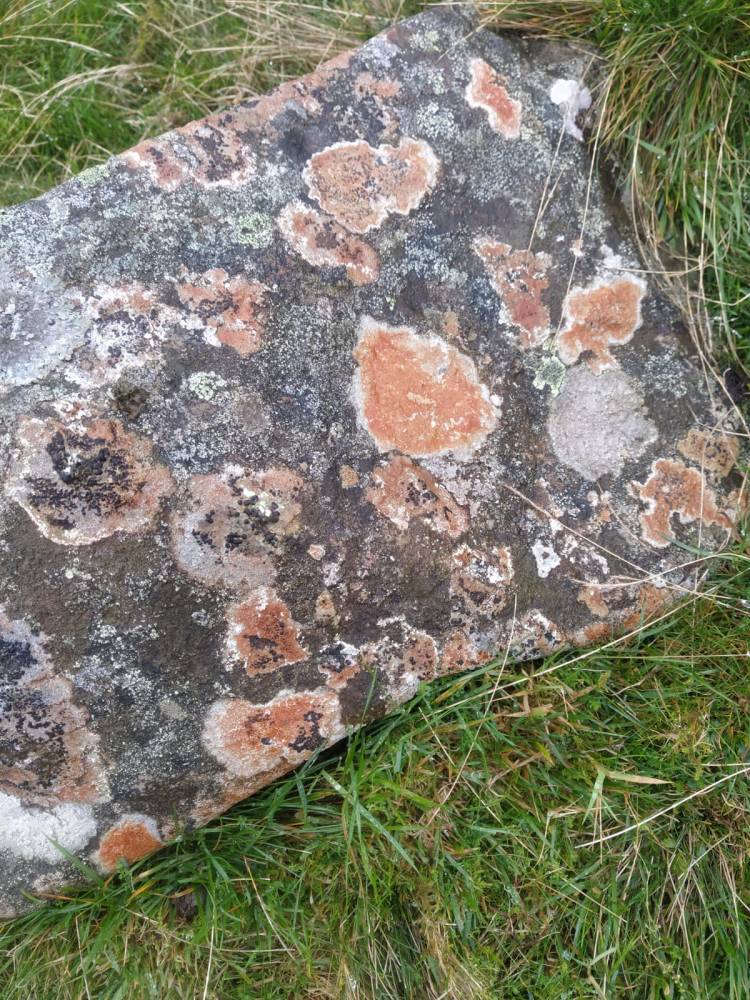
So how did I do in my quest to see a thousand different species, north of the Humber? If you’ve been following the blog so far, you’ll realise that another 50 or so in December wouldn’t quite do it and you‘d be correct, I finished the year on 977. Had Storm Arwen not wiped out the last field trip of the year, or if I’d been on another moth trapping session, or even if I’d just cast my net a bit wider more often (over 500 of those species were in my own town and over 200 in my own garden/allotment) then I would probably have scraped home. But towards the end I found that it didn’t really matter. A thousand is a nice round number, but 977 is still a good number and I achieved my original target, to see 500 plant species and in the process achieved my purpose, to learn a bit more about Natural History. In some ways it felt better being a little way off the target rather than falling short by just one or two. If nothing else it means that I don’t have to list the fungus causing my Athletes Foot to get me over the line. I did however find a very attractive, pink lichen called Verrucaria.
I was listening to an episode of Desert Island Discs recently, featuring the TV presenter, Richard Osman. One of his pieces of advice was that everybody fails; the secret is to fail well. I do feel as if this has been a good failure. It certainly added an extra element to our days out. My wife, who is by no means a naturalist, was as enthusiast about the quest as I was and, though she wasn’t too bothered about learning all the names, she probably absorbed more than she realised. There wasn’t a visit to a castle or garden that didn’t have the bonus ball of a new plant growing in a crack in the mortar or a new weed in the border. There are even a few mosses that I am confident in identifying and a few more still that are starting to emerge from the vague green ball that is mossdom, as I repeat their names.
Did I learn anything else? I learned that I’m not very good at identifying things and I learned that it’s a lot more fun looking for things with other people. Actually, I don’t know that I did learn those things; I think I knew them already, this was merely confirmation. Would I do it again? Probably not, as realistically I am never going to get into fungi, or most groups of invertebrates, so would just be cribbing off other people’s lists to get the numbers up. However I did find the moths enjoyable as they are many and varied and, crucially, mostly identifiable, even by me, so my new moth trap is likely to get well used. I do like lists though and as I have never managed to see 150 species of bird in the one year, then that is my target for 2022. I would also like to see more different species of ladybird, because why wouldn’t you?
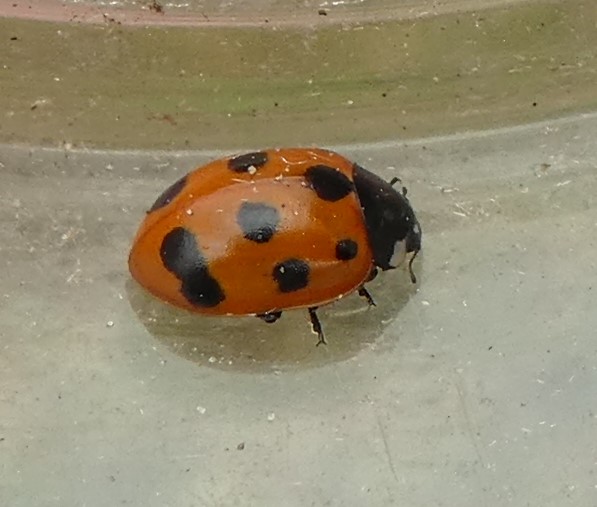
So, out of 977 species, which was my favourite? The 11 Spot Ladybird is a strong contender, because I’d never even realised there was one until I found it, plus it’s a ladybird. But top spot must go to the Mistletoe, which my wife spotted. Not just because it’s such an iconic species and so rare up here, but because it was hiding in plain sight, within metres of my house. As Elton John might have put it, “there’s more to be seen than can ever be seen!”
My final species tally for 2021 was 977 species, comprising: 123 birds; 502 plants; 195 invertebrates; 26 mammals; 5 amphibians; 3 reptiles; 7 fish; 82 fungi, lichens etc; 29 marine species; 4 fossils
Fascinating facts:
Harvest Mice are the only British species with a prehensile tail (species of anything, not just of mice), which they use to climb around on stems of grass. They don’t make their nests in the grass; instead they make it out of the grass, by weaving leaves of living grass together. This makes the nests part of the grass itself and very difficult to see.
Owl pellets are the undigested bits of an owl’s food that it effectively “sicks” back up again. Unlike other birds, owls don’t have a crop so the food goes straight to their stomach. As their stomach acid and stomach muscles are relatively weak then most of the bones of their prey, including the skull, survive intact and can be used to identify what the owl has been eating. In my limited experience, a typical Barn Owl pellet will contain two voles and a shrew.
 Raven on the Wing