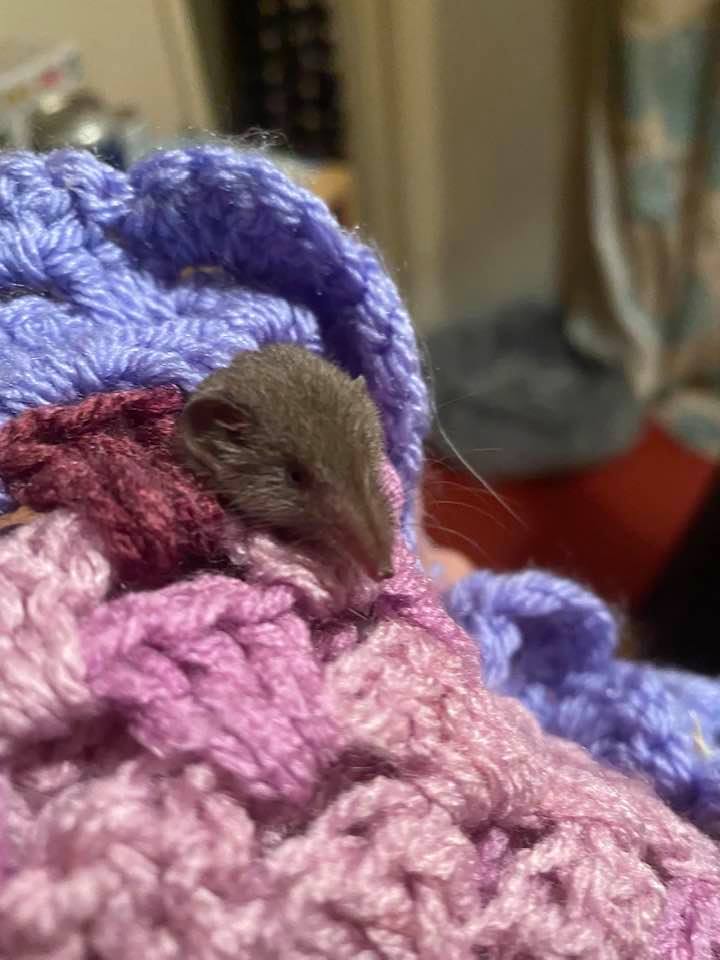
October started with great excitement. A Facebook friend posted a photo of a shrew that her cat had caught in the garage. The photo, just of its head, resembled a flattened Womble, which is exactly how I think White-toothed shrews look. I would have gone with that identification were it not for the fact that no-one has ever found a White-toothed shrew on mainland Britain before. I decided that the opportunity to make zoological history was worth the risk of looking very foolish if I was wrong and asked if there were more photos. To my even greater excitement the next photo, of the side of its head with its mouth open, showed teeth that appeared white. (For the non-soricophiles among you, all the shrew species we get in this county have red-tipped teeth). It wasn’t impossible, White-toothed shrews didn’t live in Ireland until 2007(not that anything much lives in Ireland, though that is the fault of the glaciers rather than the Irish). They then started turning up in owl pellets in Tipperary, presumably having been introduced through the horticultural trade. If it had happened in Ireland it could happen here. I was now so excited that I was all ready to shell out the fifty quid to get DNA analysis done on it when a further photo, of its full body with a ruler for scale, showed it looking more a bit more like a native Pygmy Shrew. I emailed the two people I know who are most familiar with shrews and they both thought it looked a bit odd for Pygmy Shrew as well, so I don’t feel quite so foolish, but for now the fifty quid is staying in my pocket.
Next up was the much awaited fungal foray with the field club. I turned up at their usual start time of 10am, in fact I was a minute early, but no-one was there. I double-checked; I was definitely in the right place – perhaps they weren’t. There was nothing I could do, so I went home again, only to find that I should have been there for half past ten. I dashed back, arriving just five minutes late but they were nowhere to be seen. Now if the subject of the trip is anything to do with stationary wildlife, such as plants or fungi, then the field club moves at an average of five metres per minute; you don’t need a Bloodhound to track them down, a well-trained African Giant Snail would do. This wasn’t a big wood; there was only a single track running south to north, so why couldn’t I see or hear them? I jogged up to the north end, no naturalists; I jogged down to the south end, no naturalists; I jogged up to the north end again and this time stood and listened for any excited exclamations in Latin; nothing! About to give up I gave it one last go at the southern end, from where an improbable number of them filed out one by one from behind the root of a fallen tree, as if a magician was pulling naturalists out of a hat. At least I had found them but by then I had missed about a dozen species. Even so, I added another twenty one species to my list. The most abundant was Blackening Brittlegill, which peppered the wood like soggy charcoal umbrellas. It was mostly over, but we managed to gather a range of specimens in stages ranging from greyish-brown and plump through various stages of decay culminating in the black and shrivelled. We lined them up in row and then lined ourselves as to where we thought we stood in terms of “Blackening Brittlegill years”; there was a lot of blackening and shrivelling.
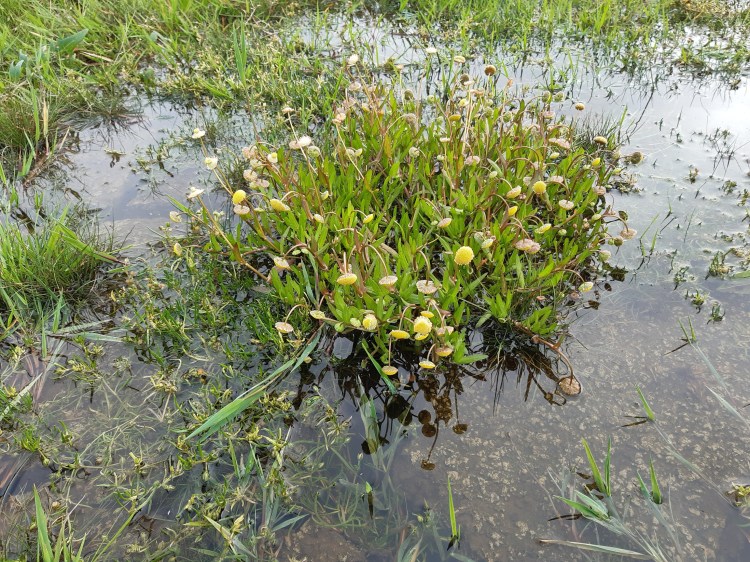
The best discovery of the month that I made myself was an odd plant, growing in a shallow pool on Seaton Common. The odd thing about it was that it didn’t appear to have any petals. As the only other plant growing in the pool was a saltmarsh plant, then all I could think of was that it was Sea Aster, which had unaccountably managed to lose all of its petals at once. It wasn’t until a couple of weeks later when someone posted on Facebook that they had been to see the only Buttonweed plant in County Durham that I realised what it was, and that mine was now the second Buttonweed plant in the county. It turns out that it is a non-native plant from New Zealand, though it can hardly be called invasive as there is only one in North Yorkshire as well.
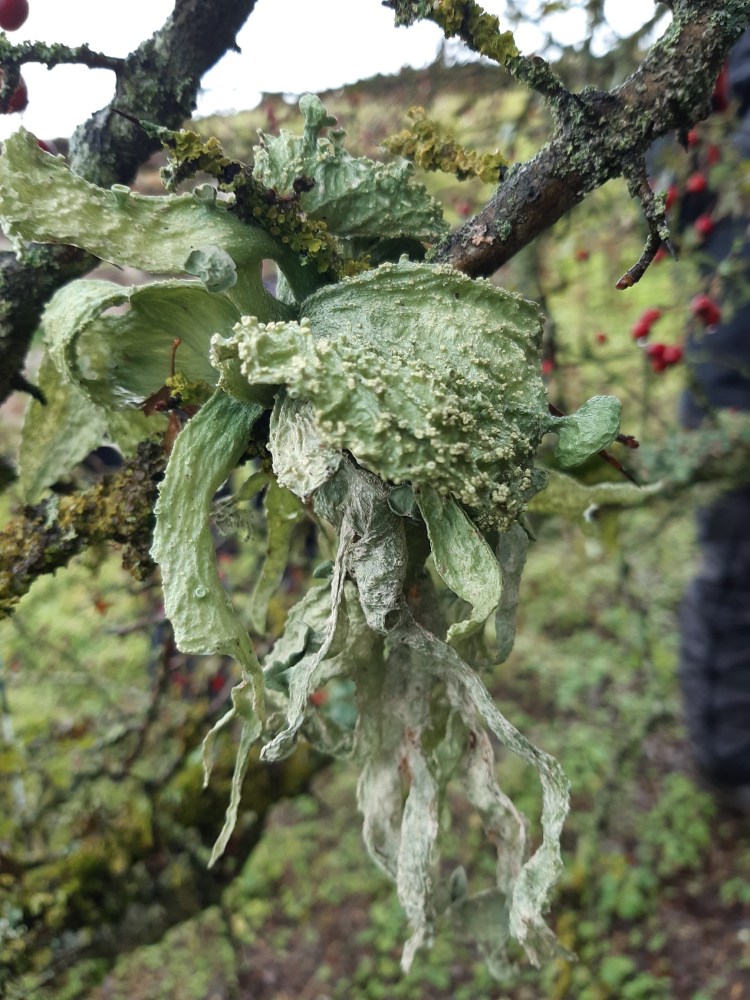
The best was saved for last though and on my birthday at the end of the month I did my first field trip with Durham Wildlife Trust botany group. This was to a hamlet called Dirt Pot, which is no more than a tiny stain on the map, close to where the three counties of Durham, Northumberland and Cumbria meet. The combination of clean air and conversely historic contamination from lead mining has resulted in a hotspot for rare or unusual plants and lichens. I saw several plants that I had only seen once or twice before, a few mosses that were completely new to me, including one that looked like a miniature palm tree and several lichens that were unlike anything I’d seen before. The one which most enthralled the leader, who was very well versed in lichens but had never seen one of these before, was the size and appearance of a “Lolo Rossa”, cut and come again, lettuce. I am taking her word for it that it was, in fact, a lichen and not a lettuce. The oddest looking, and therefore my species of the month, clung to a Hawthorn as if someone had thrown a plastic bag into the tree, which had then partially disintegrated over several years. It goes by the name of Ramalina fraxinia, but I have christened it the Dog Bag Lichen.
In spite of this botanical gold mine (alright, technically, it was a lead mine) that wasn’t the best bit. The best bit was that in this company, I was the novice. I’d gone from being the person that is often expected to know the answer, to having nothing useful to contribute whatsoever. It was like I’d got to a certain standard then discovered a secret society where nothing I knew before was of any use, a bit like “Batman Begins” for botanists. There might have been the ever so slight feeling of the sticking plaster ripping off my ecological ego, but I hardly noticed as inside I was leaping cartwheels at the prospect of advancing the botanical education that I had started over 40 years ago, on a field trip at sixth form. I wish I had met this group at the start of my quest.
Fascinating facts:
After the last glaciers retreated, Ireland was cut off from Europe before Britain was, which means that there are lots of animals that made it to Britain but which didn’t make it as far as Ireland. Amongst other absentees, Ireland has no Harvest Mice, no Weasels, no Moles and no Great Crested Newts. It wasn’t just the creeping creatures that didn’t make it to the Emerald Isle; there were no Tawny Owls or Woodpeckers until some arrived in the last decade (it’s only taken them 9,000 years). And, as for St Patrick banishing snakes from Ireland, that was about as miraculous as St Cuthbert banishing elephants from Lindisfarne.
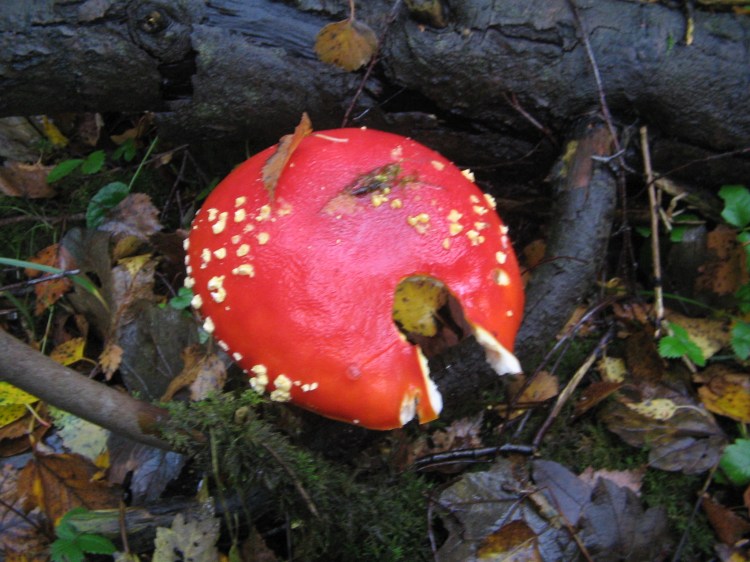
The other, very obvious fungi on my trip out with the Field Club, was Fly Agaric. This is the toadstool of choice for gnomes, bright red with a speckling of white warts. As its colour suggests, it is poisonous but not quite as much as some of its very deadly close relatives and its poison can allegedly be nulled if it is filtered through a Reindeer. It then merely becomes hallucinogenic. What I want to know is who first thought that feeding the toadstool to a Reindeer then collecting the Reindeer’s urine and drinking it, would get you high?
My tally to the end of October was 901 species, comprising: 119 birds; 456 plants; 191 invertebrates; 23 mammals, 5 amphibians, 3 reptiles, 7 fish; 64 fungi/lichens; 28 marine species; 3 fossils
 Raven on the Wing