If June had been my worst month so far, then July was probably my best. Not quite as many new species as I found in May but then these were on top of the ones I had found in May, and all of the other five months in the first half of the year as well. I’d passed the total number of plants I’d seen in the whole of 2020 by 13 July and the 636 species of all kinds that I had seen last year by the 19th.
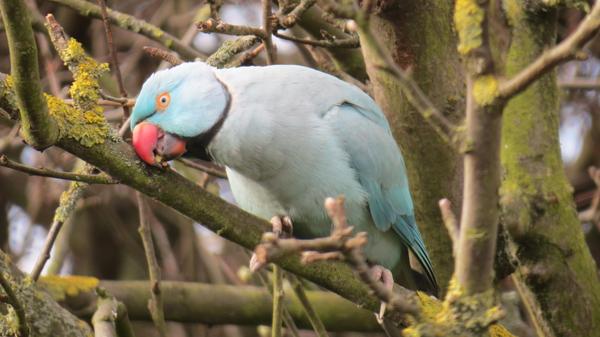
Not that it felt good to start with. I found myself with a couple of hours to spare on the first Sunday of the month so I decided on a dash around nature reserves in Darlington, mainly to see if I could pick up some of the dragonflies and damselflies that would now be on the wing. My first stop, Snipe Pond, was full of anglers and I would have felt a bit self-conscious, hovering between their rods, staring through binoculars, so I switched to the River Tees at Blackwell. A few days previously, Vince Robertson had come across a pair of Ring-necked Parakeets that were holding territory there. As well as being a new species for my year list, this was a first nesting record for this species in Darlington. Parakeets have an unmistakeable piercing call which carries a very long way, though not far enough for me to hear it that day. I did a little loop round by the river. The silt that the river deposits on this bend makes this a very fertile soil and only a few of the most vigorous and ubiquitous plant species win the battle to survive there. I’d got all of those – most in the first month. There were a lot of flies, none of which seemed particularly shy in making my acquaintance, but you need a lifetime to tell them apart properly and that wasn’t how I had spent my life so far. If I turned some logs over there would doubtless be lots of different beetles, God apparently having an inordinate fondness for them, but telling those apart is another lifetime, maybe two.
I could feel myself getting increasingly despondent with my failings as a naturalist and was all set for going home and sulking, when I remembered that I had said that I would check out the newts at Horse Field. The Field Club had visited this nature reserve earlier in the year and had seen newts but weren’t sure if they included any Great Crested ones. It was on my way anyway, so I might as well do it now. The run of hot weather meant that the first task was spotting the ponds. Only one held enough water to baptise a newt, never mind support it through its infancy. I wasn’t in a hopeful mood to start with and it wasn’t just the glass that was half empty. To my surprise then there were still a few newt larvae, hanging motionless in mid water like little newt balloons. Three of them looked like they had tiny pieces of coal embedded their tails; the classic mark of baby Great Crested Newts!
Maybe I’m just shallow but it is amazing how one turn of events can change your mood. The pond turned out to hold a few new plants as well, including Amphibious Bistort, which surrounded the margins and, true to its name, was now living on the dried up land rather than in the water. All its leaves were covered in tiny slug-like creatures which will have been sawfly larvae. I still don’t know their specific name but sawflies are generally host specific so “Amphibious Bistort Slug Sawflies” will do quite nicely for now. There were also some Picture-winged Flies, metallic green with big white splodges on their wings that they flashed at each other, in “my white splodge is better than your white splodge” fashion and, for all I know, it might have been. Jill Cunningham, of rusts and smut fame (see May blog) is also an artist of great skill and her note book is graced with intricate drawings illustrating the minute differences between the various species that she has encountered. Better still, she gave an impromptu demonstration of their courtship displays through the medium of dance, which was entertaining though I can only conclude that I don’t have any Picture-winged Fly genes in me.
A little way along from Horse Field is Brinkburn Pond. This is a deep pond, used for angling. We could fill milk bottles with newts from it when we were kids, though I suspect that the fish have eaten all the newts by now. Perhaps its greatest claim to fame is as the location for the British rod-caught record for the Pumpkinseed Sunfish (an American species that is now banned in the pet trade). Whether any Pumpkinseeds still remain below the surface I have no idea. In fact whether anything lay beneath the surface I couldn’t tell as not a drop of water could be seen for the Duckweed and the Floating Pennywort. Floating Pennywort is another illegal alien that can and does choke waterways, though in this case the Duckweed clearly had the upper hand. I was just about to give up on the pond when I saw something other than a carpet of green on the far side. It turned out to be two enormous terrapins basking on an old Coot’s nest. Not just any two terrapins either but two different species, a Red-eared, which must have been a foot long, sat on top of an even larger Yellow-bellied, so that’s two ticks! As alien species go, terrapins are one of my favourites. They are usually demonised as devourers of our native wildlife, but in fact adults are mainly vegetarians and probably eat less of our native fauna than that much-loved alien the Mandarin Duck. In any case they certainly aren’t invasive; it’s estimated that the average summer temperature in Britain would need to increase by a few degrees for them to be able to establish a self-sustaining, breeding population. If that ever happens I can guarantee that the last thing people will be worrying about will be an invasion of terrapins.
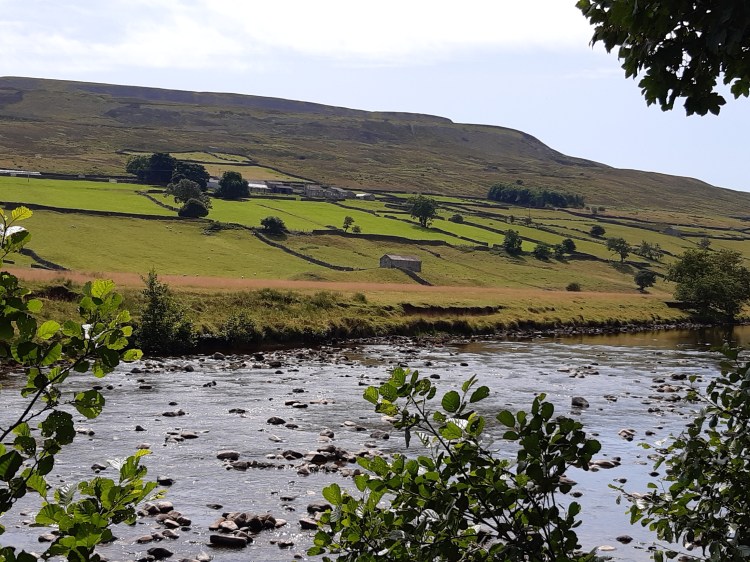
Of the three trips further afield this month, the first was for a short circular walk from Reeth to Healaugh in the Yorkshire Dales. I wasn’t holding out much hope for this one. My name for the Yorkshire Dales is the “pretty desert”. Its small, green fields edged with the grey limestone of both natural crags and drystone walls are as green and pleasant as Blake’s “Jerusalem” and there is probably nowhere in the world I would rather be, but it is heavily managed for food and sport and in my experience there is bugger-all wildlife. On what was a scorching hot day we found some stepping stones across the river and I dipped my head into water of a tongue-twisting Coca-Cola colour. I’d hoped to see Stone Loach, which I eventually found but there was another fish near it, which looked like a Stone Loach that someone had stood on. It took me a while to realise that I was looking at a Bullhead. I think the delay is because I hadn’t seen one since I was a child. They have become quite rare, in part as a less-publicised victim of the introduced American Signal Crayfish. At least here they have found a refuge. I revised my assessment to, “almost bugger- all”.
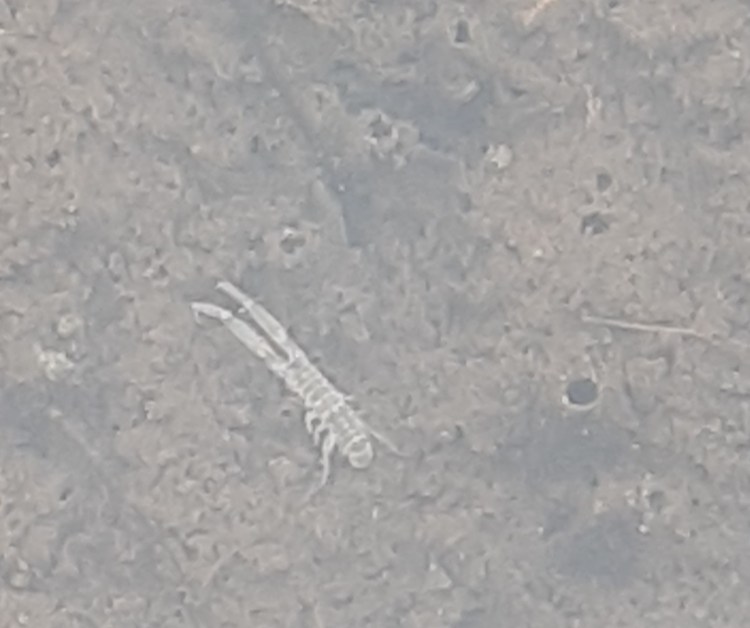
Trip number two was to Greenabella Marsh, a mixture of wetlands and grassland overlooking the mudflats of Seal Sands. This was a Darlington Field Club outing and I was leading it. I’d done a recce for it earlier so I didn’t expect to add many more species to my existing tally and so it proved. Of the 91 plant species that we recorded, all of them were already on my list. Jill Cunningham did come to my rescue with a few plant galls but it was the invertebrates that were the stars of the show this time. Perhaps the best of these was 11-spot Ladybird. I’d never seen one before; in fact of the great many numbers of spots that a ladybird can be, I’m not sure that I even realised that 11 was one of them. On checking later it turned out that there had only been a handful of records of this species in the North East in the past few years and not many more than that, ever. At least I knew that creature was a ladybird; with the next species we encountered, my first guess was that it was an alien. Not in the usual ecological sense of an alien being a species introduced from another country or continent; I mean outer-space alien! These things were the only apparent life-form in a shallow, brackish pool and were swimming and burrowing with equal facility. Whatever they were, they were ghostly white with long appendages and the debate lasted some time as to whether they had tail appendages and were swimming backwards or had ridiculously long antennae and were swimming forwards. Fortunately someone had a seaside identification book and it turned out that these were the mud shrimp, Corophium volutator. Other than nematode worms, this is conceivably the most abundant species on Teesmouth and is what most of the hundreds of small wading birds that Teesmouth is famous for feed on. I’ve written its name lots of times in reports, but I had no idea that it looked like an alien; shows how much I have to learn.
The final trip out was to South Gare. In terms of its spiritual significance for botanists it’s more New Age psychedelic trip than Mecca, given the weird combinations of habitats and plants. This was another Field Club outing and I was hoping that some of the group’s botanists would be present, as much in the hope of improving my botany as in adding new species. Unfortunately they weren’t so as the person most familiar with the locations of the various plant communities I ended up leading the group (if the term leading could ever be used with the Field Club, who manage to make cats seem as well drilled as a synchronised swimming team). It proved to be an excellent way of re-enforcing my knowledge but obviously not a good way to enhance it. Nevertheless I would defy anyone to go to South Gare in summer and not find a new plant species for the year; after all, people have found new plants for the country there. I added 20 in total. Perhaps the oddest of these was Courgette, growing on the strandline along with typical beach plants, and a Tomato! It turns out that it was only the third Courgette record for North East Yorkshire – I feel quite proud of that.
I ended the seventh month on 699 species: 362 plants; 105 birds; 22 mammals; 3 reptiles; 4 amphibians; 5 fish; 159 invertebrates; 18 marine species and 21 fungi etc.
Fascinating facts:
The mud shrimp can exist at densities of 50,000 shrimps per square metre. Sandpipers can eat them at a rate of 50 per minute. I’m sure there’s a KS2 maths question in there somewhere.
There are 46 species of ladybird in Britain, with the number of spots the different species have ranging from 2 to 24. Not all of the numbers in between are represented though, for example there isn’t a 17 spot Ladybird. Some ladybirds don’t have any spots at all (is that even a ladybird?).
 Raven on the Wing