Where did June go? Before I knew it, it was the 23rd and I had only recorded an additional five species. Not that I hadn’t seen any wildlife this month, in fact I had seen quite a lot, including some species that I had never seen in the wild before, such as Muntjac and Spoonbill, but these were down in north Norfolk on the week’s holiday that we had postponed from the previous year. North Norfolk is undoubtedly much better for wildlife than Northumbria but it’s not Northumbria so those species don’t count for my list. It was fascinating to see the differences though. The owner of the cottage where we stayed was a keen naturalist, so we would swap information on what was rare and what was common in our respective bits of England. The comparisons merit a whole blog of its own but there is no doubt that what is normal for Norfolk certainly isn’t normal here.
Having left myself seven days and needing some 95 species, I turned to my notebooks, to the photo gallery on my phone and to the small plastic bags containing bits of decomposing vegetation that I have laid about the house. These were the things that I had noticed, photographed or collected but which I hadn’t had chance to try and identify yet. Sadly, the bits of plant were only fit for the recycling but it turns out that the orange stain that I have been seeing on the Ash trees along Black Path was not one for my list of fungi, lichens and other biological obscurities, as I had assumed. It is actually a plant, a kind of algae, called Trentopohlia, but one that contains the same pigment that gives carrots their colour. Also, now that I knew what smut looked like, I realised that the black bits on many of the False Oat Grass seed heads that I discarded when picking seed heads for my budgies, was none other than False Oat Grass Smut, Urocystis avenae-eliatoris. It is currently leading the race for the least interesting form of wildlife that I have seen all year but it still counts the same as the exceptional ones (a bit like democracy).
Of the five additional species I had seen in the first three weeks of the month, all had come to me rather than me going looking for them and two were real surprise visits. On the 17th a Banded Demoiselle fluttered onto the Forsythia bush outside our window and hung around as if trying to get my attention. These little damselflies look like they have been painted in dark-blue Hammerite and their wings have huge blue-black splodges, which, when they fly, produce a sort of strobe effect making them look like dancing fairies. These are damselflies of slow flowing water so shouldn’t have been in my garden; I think it was just taking pity on me.
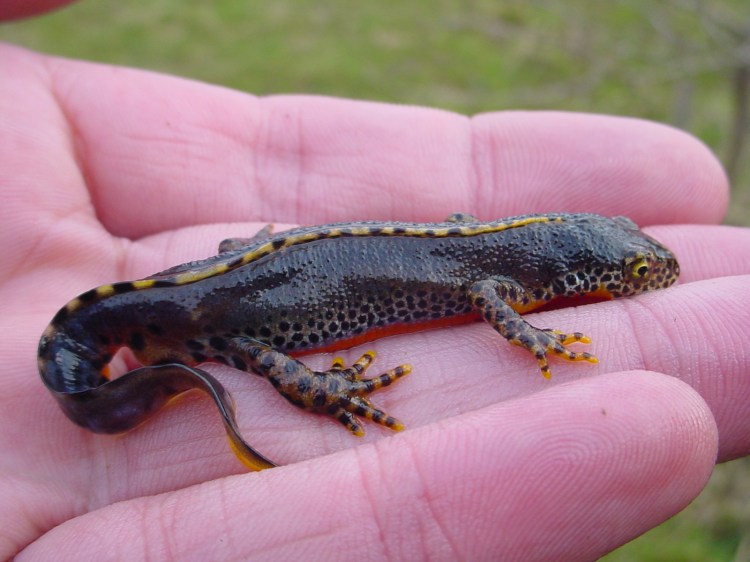
The other thing that definitely shouldn’t have been in my garden was an Alpine Newt. I bred a dozen of these almost two decades ago and the first two of those larvae to shed their gills and leave the water climbed through the slits in the lid of the tank that same night and escaped. The others went safely to a local pet shop but somehow these two must have both survived the overwhelming odds that all young animals face. To double the odds again they must have been a male and a female, for a few years later I was dipping my pond with a net when I found a total of four Alpine Newts. I didn’t need to be a mathematician to realise that at least two of those weren’t the ones that had escaped. Alpine Newts are a western European species, but one that didn’t get its skates on in time to cross Doggerland before Britain was cut off from mainland Europe at the end of the last ice age (at least as far as we know). They are therefore classed as illegal aliens, so those four also got donated to a local pet shop. I dip a net in my pond several times each year and for the next few years, every year or so I would pull out one or two Alpine Newts and consign them to captivity. As my ponds is just a few feet long I was pretty sure I got everything that was in there and for a good five years now this hasn’t included any Alpine Newts. Short of them recapitulating the evolution of reptiles in my garden, I’m not quite sure how this one has managed to evade me until now.
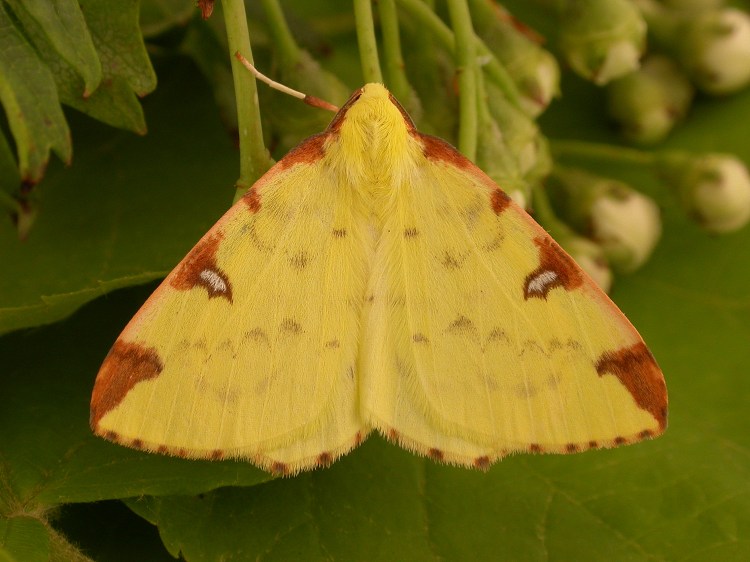
In order to save myself from a total disaster, with two days of the month to go I tagged along with Robert Woods on a moth trapping session. Robert knows more about moths than anyone I have ever met knows about anything. His eyesight is if anything worse than mine but he never ceases to amaze me as to how he can identify a moth in flight, when I can do no more than determine whether it was a big moth or a little moth. What’s more, the week before he had caught 80 different species of moth in a location not far from where he was trapping that night. Eighty would do me nicely. I arrived for 10pm by which time Robert and Steve, his fellow moth trapper (I think that sounds better than mother) had already made a start of sweeping the grass for any day flying moths in the last of the daylight. They had already caught, and released, ten different species. OK, so 70 would still be a good number. Much of insect life is what would be termed crepuscular, that is to say it comes out at dusk, moths on the other hand include the properly nocturnal and the number of their different species builds up as the night goes on. Robert and Steve were planning to stay until 2am. Having to get up for work the following day I stayed until midnight and was rewarded with a total of 18 different species. Not quite what I was hoping for but all but one species was a first for this year and at least seven were entirely new to me and who could be disappointed by moths with names like Mottled Beauty, Brimstone and Lutestring. As it turned out, it was a fairly poor night for moths, which for them meant 50 species between them, so they got a flyer at half past one.
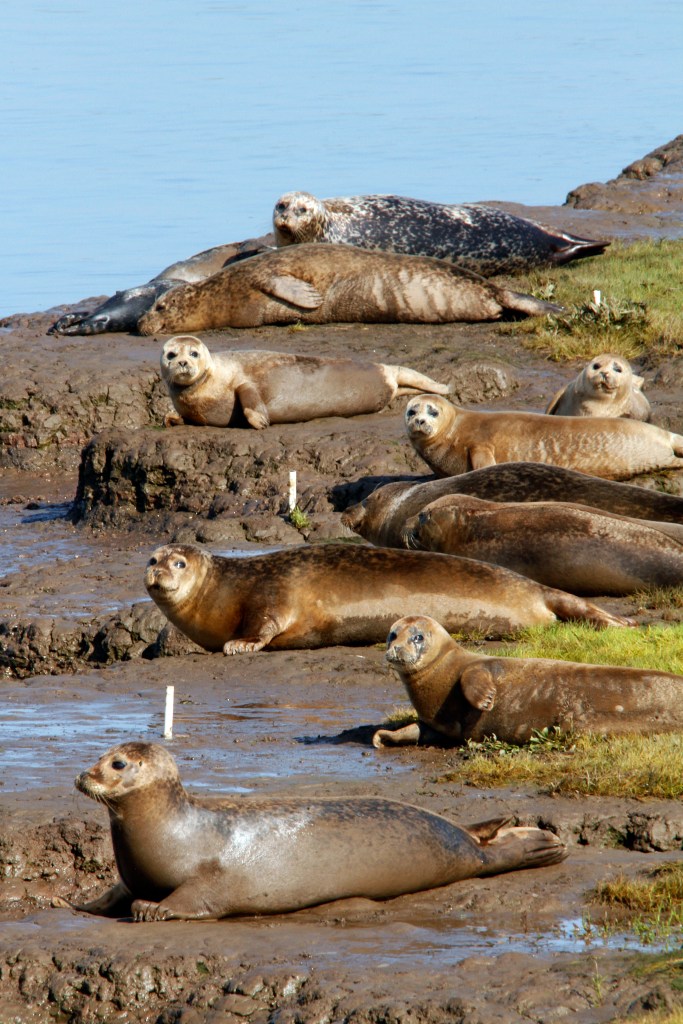
One of the reasons that I try never to tell people that I work as an ecologist is that they imagine that I spend my days tramping around the countryside with binoculars. In reality at least 90% is either reading or writing reports and of the ten percent outdoors, nine are spent on industrial complexes. Work the following day was a treat though; I got to take some PhD students to look for seal poo. If you are a scientist there is a lot you can learn from seal poo and there is becoming quite the market for it among academics, but it is a rare commodity. Apparently, if it is truism that bears crap in the woods then the aquatic equivalent would appear to be that seals shit in the sea. To make things harder, even when they do it on land you can’t just go and collect it. All of the places where seals haul out on Teesside are Sites of Special Scientific Interest and as seal poo is biological material we needed to be armed with a letter of consent, to go with the trowel, plastic bags and sample bottles. To make things harder still, there is no object in the natural world that is better camouflaged than seal poo. It is rather similar to what might pass out of a Labrador (in case you were wondering) but, it is the colour of mud, it is deposited on mud and it is usually squashed into the mud where the seal has laid on it. Not only that, the mudflat that it is deposited on is continually breaking up into little balls the size of seal poo. If you happen to be the world champion at “Where’s Wally”, you might just have a chance.
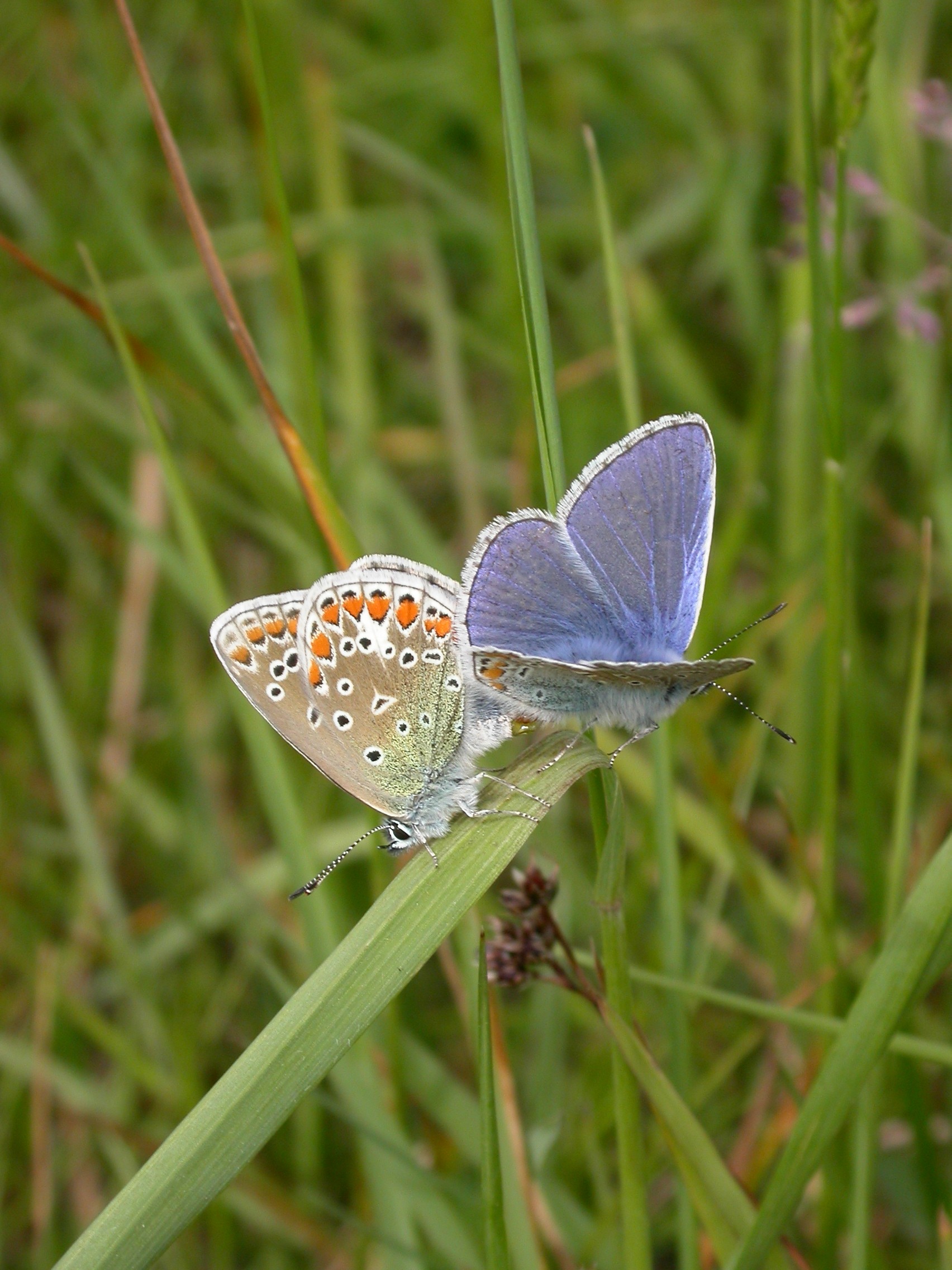
We prodded quite a few small mud-coloured balls that day, of which about half a dozen seemed to be the real deal (and you’d be surprised by just how satisfying that can be) but it was the mile walk along the sea wall that occupied more of my notebook. The butterflies and day flying moths, whose appearance had been delayed by the lousy weather earlier in the year, had finally come out. These included the Common Blue, a butterfly so dazzlingly electric in colour that you would scarcely believe we had such things in this country. Considerably drabber and more bittersweet, the “brown” butterflies were also on the wing. Brown butterfly season is one of the markers of the year that I wish I could postpone indefinitely. It means that spring is well and truly over and that we are into high summer; another month and the seeds will be setting in readiness for the next year. Still there were three different species of brown butterfly and this month I was happy to look at them as roundabouts rather than as swings.
In the end I scrabbled my way to a tally of 573 species, just 41 more than at the end of May. This comprised: 303 plants; 102 birds; 17 mammals; 1 reptile; 4 amphibians; 2 fish; 111 invertebrates (with moths taking a clear lead over butterflies, 27 to 16); 15 marine species and 17 fungi/lichens/rusts, including a little bit of smut.
Fascinating facts:
- “What is the difference between butterflies and moths?” Probably the second most commonly asked wildlife question after, “what is the point of wasps?” Technically there isn’t one, especially if you look at butterflies and moths across the world. In practice though, at least in this country, there are a couple of pointers which will tell most of them apart. Butterfly antennae have a little club on the tip whereas moth’s antennae are feathered or tapered. Also, almost all butterflies hold their wings up vertically when they rest, so that you are looking at the underneath of the wing, whereas moths rest with them horizontal or folded over their backs, so that you are looking at the tops of their wings. Robert tells me that there is a more technical difference in that many moths have a catch like structure called a retinaculum and a bristle-like hook called a frenulum, which makes the connection between the fore and hind wings more robust. With the exception of an obscure species of Skipper in Australia, butterflies don’t. Even someone with Robert’s practiced eye isn’t going to see that though.
- Harbour Seals, which are the species that breeds on Teesside, are unique among seal species in having precocious pups. None of this lying around in a white, fluffy coat looking cute, for them. Instead, when the very next tide comes in they are off swimming with their mothers. Seal Sands, were the pups are born, is only above water for a maximum of four hours at each low tide, so the pups may well be swimming away within an hour of being born.
 Raven on the Wing