I took my eye off the ball a bit in April. I’d had in mind that it would have been a bit of a banker, you know with spring and all that. But spring seemed to be in short supply, poking its head out occasionally between pockets of frost in what I’m told was the coldest April for 40 years. That’s no excuse though for the fact that I only did one trip out where the focus was principally on seeing more species.
The month started well, with Opposite-leaved Golden Saxifrage, which oddly was growing in a grassy ditch in the stream beside the walled garden at Raby Castle. This plant is a firm indicator of ancient woodland, not a meadow plant, so I assume that the ditch gave it the bit of shade that it needed to have hung on from the days when the park would have been ancient woodland.
A short walk from Gilling West towards Richmond the following weekend turned up a few more of this specialised guild of plants, only this time growing in their proper niche. Town Hall Clock, its flowers facing squarely to four sides of the compass whilst a fifth flower points to the sky, is one that I haven’t seen in my area before and Hairy Wood Rush was a completely new plant for me. This walk also produced my favourite plant of the month, on which I am also going to bestow the winner of species of the month for April, which was actually just a moss. It was growing on drystone walls, where it had shrivelled in what was also a notably dry month and clung tenaciously like a veneer of gold. Not knowing what it was I tentatively called it Golden Curly Wall Moss. It resembled the hair on the back of my head after four months of lockdown. It turns out that its actual name is Silky Wall Feather Moss or to give it its scientific name Homalothecium seracium. I’ve been saying that out loud in my best Dumbledore voice ever since but, as far as I am aware, so far I have remained visible.
We did get one day, the 16th to be precise, which encapsulated spring and by good fortune we had arranged a little walk out to Hurworth Burn Reservoir with my sister-in-law and her partner. In fact, so spring-like was the day that I saw her in shorts for the first time in 35 years. Hurworth Burn Reservoir is, as far as makes no difference, the source of the River Skerne which ran close to my house when I was growing up and, as I’ve never moved more than a mile from where I was born, is still within a gentle stroll. Hurworth Burn might only be 15 miles from my house but this was only the second time I’ve been there, the last being in 1988 with a local birdwatching club.
As soon as we picked up the trail along the former Castle Eden railway line you knew that something had changed. Within yards I heard my first Willow Warbler of the year and then seemingly in every third bush there was another one, it’s mellow, tumbling call, the sound of spring. They were vying for attention with their almost identical relative, the Chiffchaff, whose doggedly onomatopoeic call had filled the treetops for several weeks now. The Chiffchaff tells you that winter is over, but it’s the Willow Warbler that announces that spring has arrived. I added seven new birds to my list that morning, including a couple of Pink-footed Geese, winter visitors that should have been on their way back to Iceland by now but which looked to be in no hurry to make the trip.
I will no doubt keep reiterating throughout this blog that really it’s not about the numbers, it’s about enjoying and learning about the wildlife and nothing typified that more than a pair of Great Crested Grebes that we watched on the reservoir. Probably no bird in this country has a more elaborate, or bizarre, courtship ritual. Gliding head down across the surface, like U-boats about the engage in battle, they meet, breast pressed against breast, and shake their heads in some unfathomable avian semaphore. This is just the prelude though; at some signal known only to them, they dive and emerge with great beakfuls of muddy pondweed only this time when they come together they are paddling so frantically that they are effectively walking on the water. It was beautiful and breath taking and I should have just gawped in rapt amazement but instead all I could think of was “which grebe first came up with the idea of the pond weed?”
Hurworth Burn gave a welcome boost to the list but otherwise things just ticked over. Ticking over can be enjoyable though and no more so that in our Sunday morning walks to pick up our baby granddaughter and push her back to our house along a short cut known locally as the Black Path. On the face of it, the Black Path is as botanically boring as only an urban footpath can be, with its soils enriched by legions of dog-walkers. It is largely a line of Hawthorn and Willow trees, underlain by Nettle, Raspberries and Feather Moss. But every week, in spite of walking half of it backwards to keep my granddaughter amused, I always seem to add one or two new plants. The best yet was White Bryony, a southern species which seems to reach its northern limit in Darlington, but so rarely that few local naturalists seem to have seen it.
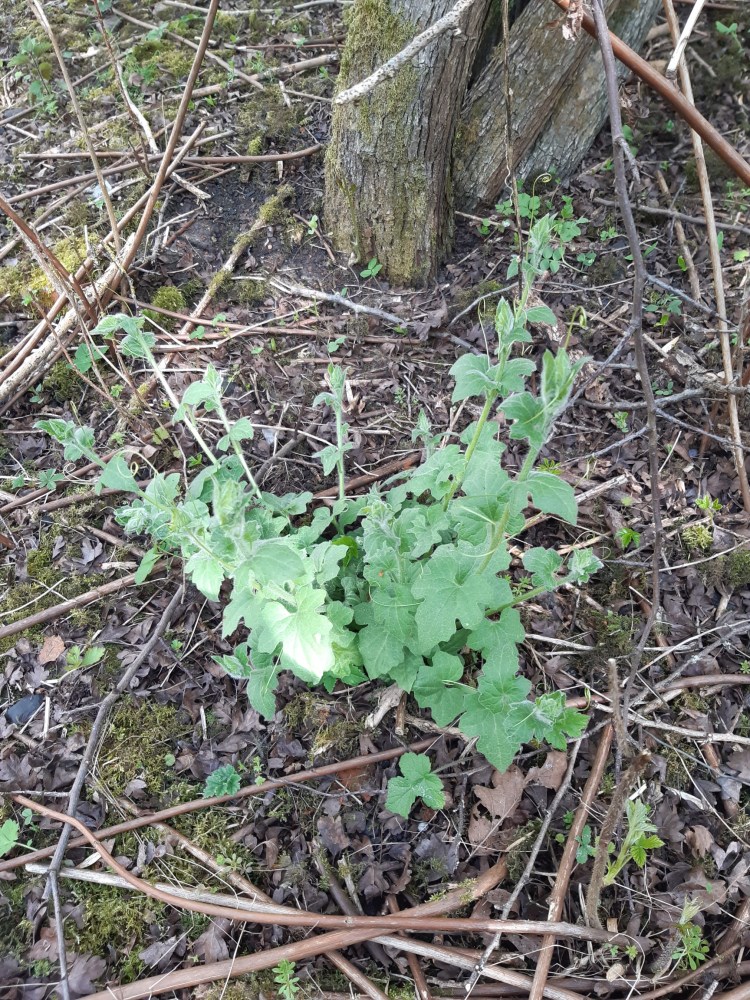
My wildlife spotting trip was, as I promised myself at the start of the year, to South Gare. It has been described as being “botanically bonkers”, such are the incongruous mixtures of its huge number of plant species. I was expecting to fill a couple of pages of my notebook with new plants for my year list, or even new plants for my lifetime, but the ones that were out in a readily recognisable form were largely ones that I had already seen. Actually when I totted them all up, I did add 11 plants, which would be good for anywhere else, but South Gare can do much better than that; it’s just playing hard to get. South Gare did reward me with a few other things though, including my first terns of the year. I love terns! At a distance they are the gleaming, ethereal “sea swallows”, up close they are like someone stuck feathers on a Ray Harryhausen pterodactyl. I also saw my first seal of the year. They are another iconic species for me, not least because I co-ordinate the Teesmouth seal monitoring programme on behalf of INCA. Sadly this one was long dead and laid high up on the beach like a sand sculpture, so much so that I needed to get within a few yards of it to be sure that it was a seal. Anyway it was and its long nose and long claws gave it away as a Grey Seal, so it went in the book along with the sand flies that danced round its corpse. Its death will at least be recorded for posterity in the next annual Teesmouth seal report.

dreams of being a Labrador when it grows up
The last day of the month saw me just over the 390 mark and in a last minute bid to make it a round 400 I rooted around on my allotment, literally rooted around. I was sure that there would be a bit of Couch Grass that I had missed in my autumn weeding (there’s always a bit of Couch Grass that you miss) but even with that and a couple of other weeds I couldn’t quite make it. Technically I might be on target, almost 400 species in four months, but that’s nearly all the easy ones done. I will have to try harder in May and June; they are the key months, for plants at least, after which most start to shrivel again. I might add a reasonable number of insects in July and August but after that I’m relying on fungi and odds and ends. If almost 400 didn’t quite cut it for April, 500 certainly wont for May.
Tally to 30th April: 396 species, comprising 207 plants; 84 birds; 15 mammals; 3 amphibians; 1 reptile; 2 fish; 63 invertebrates (moths and bees tying for first place with eight species each, with butterflies and snails each just behind on seven); 11 fungi/ lichens; 7 marine species (4 shells, 2 crabs, 1 starfish and 3 bits of seaweed)
Fascinating facts
If you are a rubbish gardener, mosses are for you. Some species have the ability to dry out completely, by which I mean go crunchy in your pocket, then come back life when they are watered.
The UK has almost half of all the Grey Seals in the world, so has a particular responsibility for them. Only a tiny fraction of these, less than 100, live on Teesside.
 Raven on the Wing