This is an account of my quest to see 1,000 different species, in Northumbria, in 2021.
Why? Well as an ecologist it might reasonably be assumed that I am quite good at identifying wildlife but while I may know “stuff” about wildlife, I’m not that great at “spot the difference” and with wildlife, spotting the difference can take a bit of doing. One blade of grass looks much the same as any other, even though it could easily be one of a dozen different types; some bats can only be reliably told apart by their DNA and even with those most familiar of creatures, the birds, some need to be listened to and not just looked at.
Every year I keep a diary of sorts. Usually this includes a summary of the year just gone and a short list of goals for the year to come. I’ve been doing this for over 30 years now and one goal that has featured in most of those years is to become a decent botanist. So each year I would learn a few new plants and inevitably forget a couple of old ones. Last year was a bit of an exception, I decided to tackle the goal by making it something that I could quantify, so I made it, to identify 500 different wild plants, which I then expanded to identify a thousand different species of any kind.
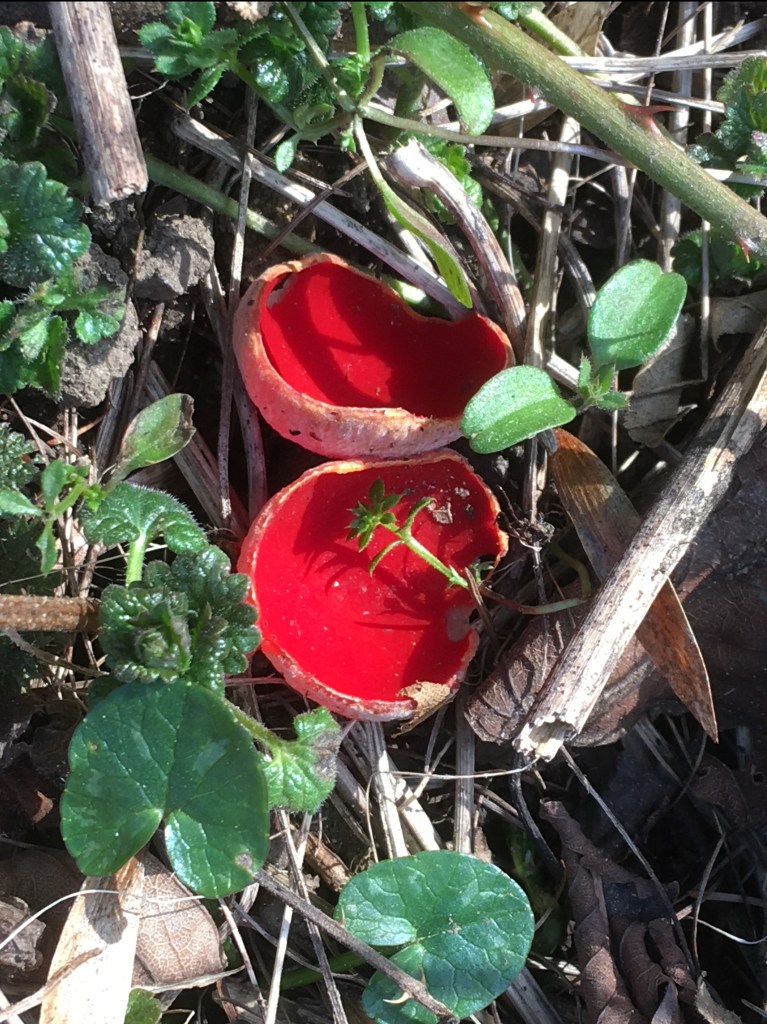
This started reasonably well until an unexpected species called Covid-19 put my plans on hold, along with those of the rest of humanity. Our week’s holiday in Norfolk which could be banked on to produce several new plants and other assorted wildlife not known in the north east was postponed indefinitely and, for a few months, plant hunting was confined to cracks in the pavements in the streets around our house. The cracks in the pavement proved surprisingly diverse and between that and a slight easing of restrictions over the summer I ended up with a total of 637 species identified, the last being a Mandarin drake, which had become something of a minor celebrity on Drinkfield Marsh and which I caught up with on Boxing Day.
This year I am going to play the game again but like any game it has a few rules. For a start all the species have to be north of the Humber, which I intended to be the north east and North Yorkshire but which might get expanded to the borders of the ancient kingdoms of Bernicia and Deira as I’m desperate to see the Lakes again and visit Edinburgh Zoo, if the C-species allows it. I could play the advanced version and limit myself just to the north east, after all that’s where I live and have spent 99% of the minutes of my life. But then why would anyone not go to North Yorkshire if they could and, living in Darlington, I can be close enough to cough across the Tees at it. There is an ecological reason for making the Humber the boundary as well. As with many other things, there is a north-south divide in ecology. Actually in ecology there are lots of them but for many species the Humber is where that line currently lies. The south is a different country with many different creatures. For example, for my favourite insect family, the grasshoppers, the south has over thirty species, we have less than ten.
The second rule to this game makes it a lot harder but is actually the purpose behind all this. As the physicist Richard Feynman once said, “what is the point in knowing what the bird is called if you don’t know anything about the bird.” The name is just the label on the jar, to be an ecologist you should know something about the ingredients. So for every species I identify, it only counts if I learn a fact about it. It could be the habitat preferences of a woodlouse, or the medicinal properties of a plant; it doesn’t really matter what but nature is a jigsaw and each piece must have at least one connection to something else.
Conversely the third rule should make things easier; I am going to recruit some help. These days there are numerous recording schemes or social media pages where you can post a photo of something and have someone more expert than you identify it. I’ve yet to use one and there will no doubt be much debate to wade through to find out which scheme would be the most useful but without them I’m probably not going to get very far with the likes of fungi. Not everything can be identified by photographs though, particularly invertebrates. For example the giant House Spiders that invade our houses in autumn could potentially be one of three species. The only way to know which one it is for sure is to pin it down and look at its bits under a magnifier. Rule 3b is that if I can’t identify something without having to dissect it then I just count it to the nearest common denominator, in this case, giant House Spider. It will save a lot of grief, both for me and the spiders.
 Raven on the Wing